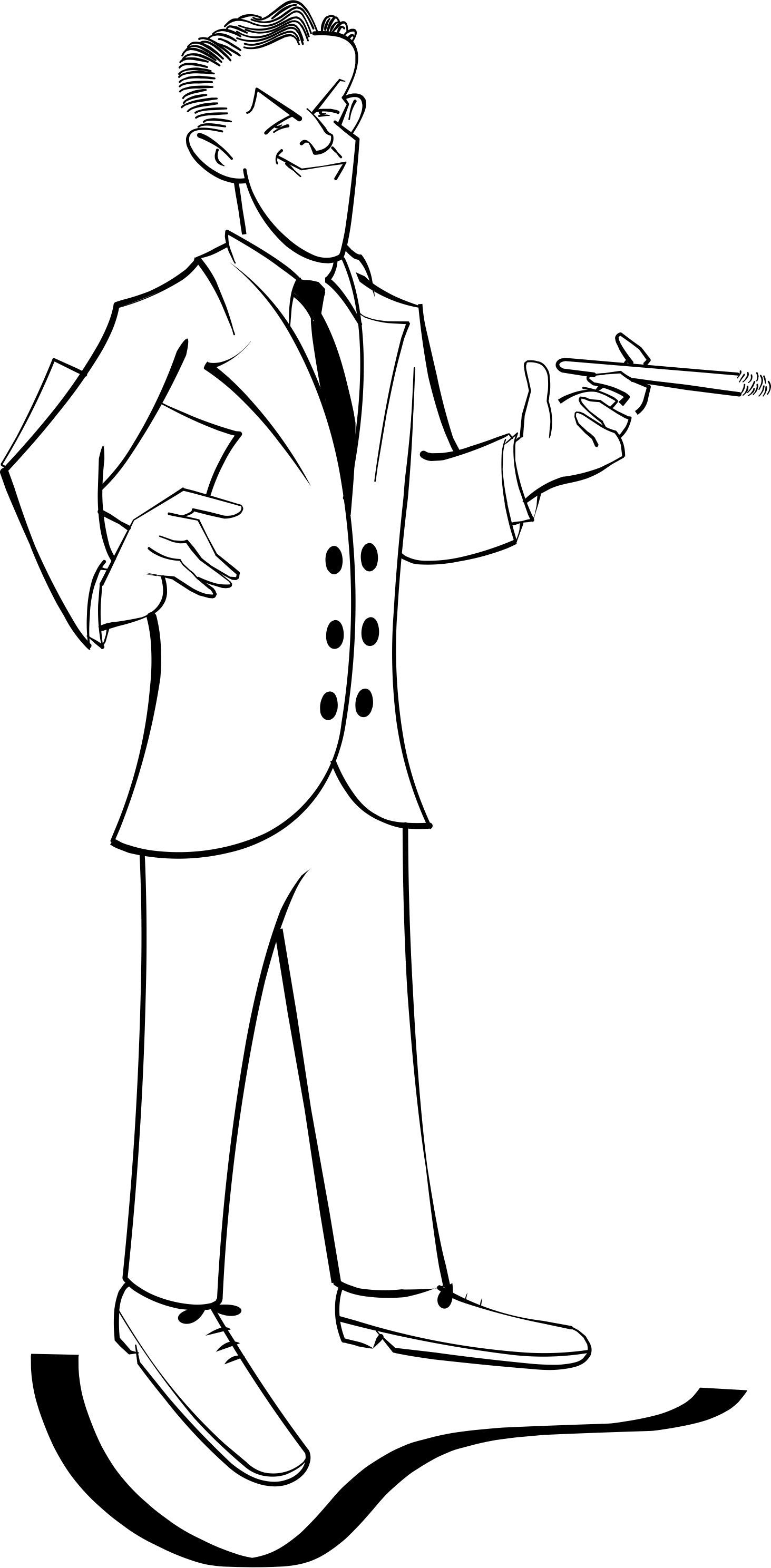
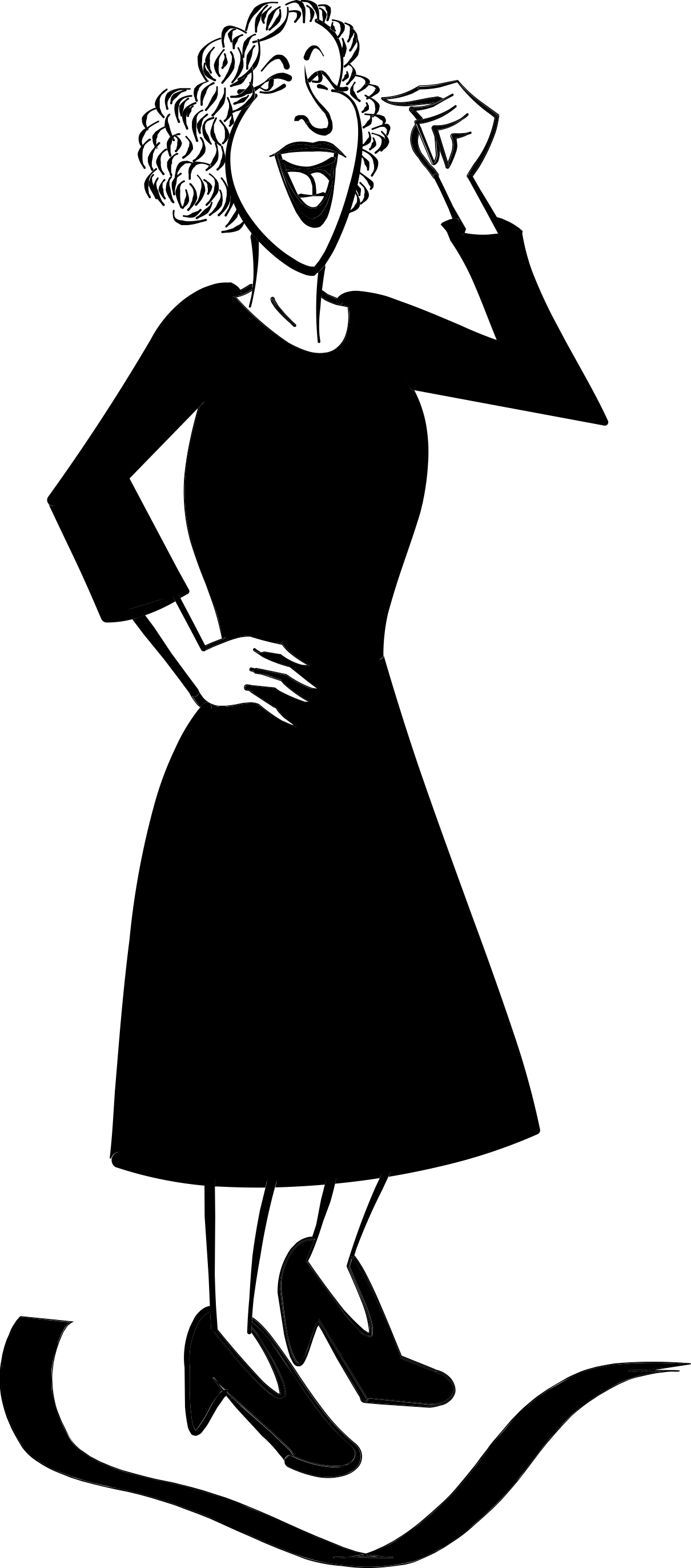
| George: Gracie: | "Say 'Goodnight', Gracie." "Goodnight." |
| The Burns and Allen Show (1950-1958). | |
So no. At the closing of the Burns and Allen Show, the exchange was not - that's NOT! NOT! NOT! -
| George: Gracie: | "Say 'Goodnight', Gracie." " 'Goodnight, Gracie.' " |
Instead viewers saw this joke on the 1960's "hippie"-inspired television show Rowan and Martin's Laugh-In starring Dan Rowan and Dick Martin. At the end of the show Dan and Dick would come on screen where Dick - the "dumb one" - would make some nutty banality leading to the final exchange:
| Dan: Dick: | "Say 'Goodnight', Dick." " 'Goodnight, Dick' ". |

In fact, a lot of times George did NOT even say "Goodnight Gracie". Instead they might have a final exchange like:
| Gracie: | "Say, George." |
| George: | "Yes?" |
| Gracie: | "Mrs. Macavetti went back home." |
| George: | "Oh, good, good, good." |
| Gracie: | "Yeah. When her husband heard that she was here, he came over and he brought her a five pound box of candy and a great big bouquet of flowers." |
| George: | "Oh, wasn't that nice?" |
| Gracie: | "Mm-hm. But it didn't help him. She went home anyhow." |
| George: | "Say 'Goodnight'." |
| Gracie: | "Goodnight." |
| George: | "Goodnight." |


The Burns and Allen Show was on the air for 25 years. But exactly when the show began is a matter of definition rather than a chronological ordering. Although it wasn't on their own show, George Burns and Gracie Allen debuted on the radio in 1929 and began appearing regularly on the early radio programs hosted by Rudy Vallée and Guy Lombardo.
But the actual Burns and Allen stand-alone show began in 1935 and - a surprise to many - without any mention of George. It was The Adventures of Gracie. The selective title reflects the usual wisdom that the - quote - "funny one" - unquote - is the - quote - "star of the show" - unquote - and the - quote - "straight man" - unquote - necessarily plays the second fiddle.
And most of the listeners did consider Gracie the star. It wasn't uncommon for people who listened to the original radio broadcast to ask people if they had listened to "Gracie Allen" the night before. It wasn't what people now call The Burns and Allen Show until 1937 when it always opened as George Burns and Gracie Allen.
The show was a situation comedy. As it was also a radio program an announcer would help set up the episode's scenario. Gracie provided the main comedy and George was the straight man. So we can say that regardless of billing, Gracie really was the star of the show.
The premise of the show was actually pretty standard fare for the time. The wife was somewhat scatterbrained and a source of trials but much affection for the long-suffering husband. This comedic format continued to be part of American culture with the popular I Love Lucy and later on All in the Family where Edith was often called "Dingbat" by husband Archie. The Burns and Allen Show actually ran a year past I Love Lucy and ended in 1958. Of course Lucille Ball had the spin-off series The Lucy Show (1962 - 1968), Here's Lucy (1968 - 1974), and Life with Lucy (1986), all of which she also produced.1
Footnote
There is some irony in that Lucille Ball - one of the most astute and successful television producers and businesswomen - gained her fame playing a rather scramble-minded housewife. Her acting career began long before I Love Lucy. In 1934 she had a part in the Three Stooges short film Three Little Pigskins where she played a rather addle-brained girlfriend of a gangster who was part owner of a professional football team.
In 1950 Lucy and her husband Desi Arnaz founded the production company commonsensicially called Desilu. Lucy and Desi not only produced I Love Lucy but also the TV hits Mannix, The Untouchables, Mission: Impossible, and - yes - Star Trek.
However, George and Gracie moved to television in 1950 and developed a format that allowed George to be a full co-star with Gracie. Each episode began with George coming on stage as the host (or "presenter" in England). He would talk with the audience about him and Gracie and then they'd launch into what was a show within a show about something that happened in their lives. At the end of the show George and Gracie would come on stage and after some more banter would wish the audience good night.
Inevitably with George playing the part of the host in the opening and closing, more people began to think of George as the main star. This impression was also solidified as George got first name billing in the titles. So when the show closed after an eight year run - quite long for a 1950's television series - people tended to remember it as the George Burns show.
You may get the impression on popular informational websites that George Burns had fallen from public view once the show closed but only gained a new following after he appeared in The Sunshine Boys with Walter Matthau in 1975, and then in 1977 in Oh, God! with John Denver and Teri Garr. Well, that's true and false.
Certainly George found a new generation of young fans with the release of the movies. But after Gracie and George's show ended, George remained a fixture of television throughout the 1960's and early 70's. He appeared as guest on a number of shows including 50 (!) appearances on The Tonight Show with Johnny Carson (where on one show he sang an impromptu duet with Mama Cass Elliot). George also showed up in another series Wendy and Me in 1964. Other shows where he appeared were Swing Out, Sweet Land a patriotic TV Movie about the United States and which was the first TV special hosted by John Wayne. He even had a guest shot in Mr. Ed which was a series about a talking horse.
Gracie retired from acting after the show and lived only a few more years dying at age 69 in 1964. So it was George who appeared in the following decades where watching television became almost synonymous with Living the American Way of Life. George's last live television appearance was on February 25, 1995, where he received a Lifetime Achievement Award from the Screen Actor's Guild. He was 99 years old. He did appear on television again - this time at age 100 - for the Australian Football League but the film wasn't shown until after his death on March 9, 1996.
References
Say Good Night, Gracie! The Story of Burns & Allen, Cheryl Blythe and Susan Sackett, Dutton, 1986.
"Blanche for President", Burns and Allen Show, January 17, 1952.