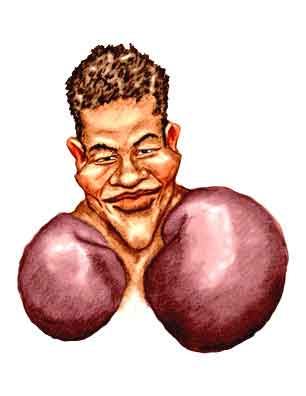
Sir Henry Cooper and Friend
(Click on the image to zoom in.)
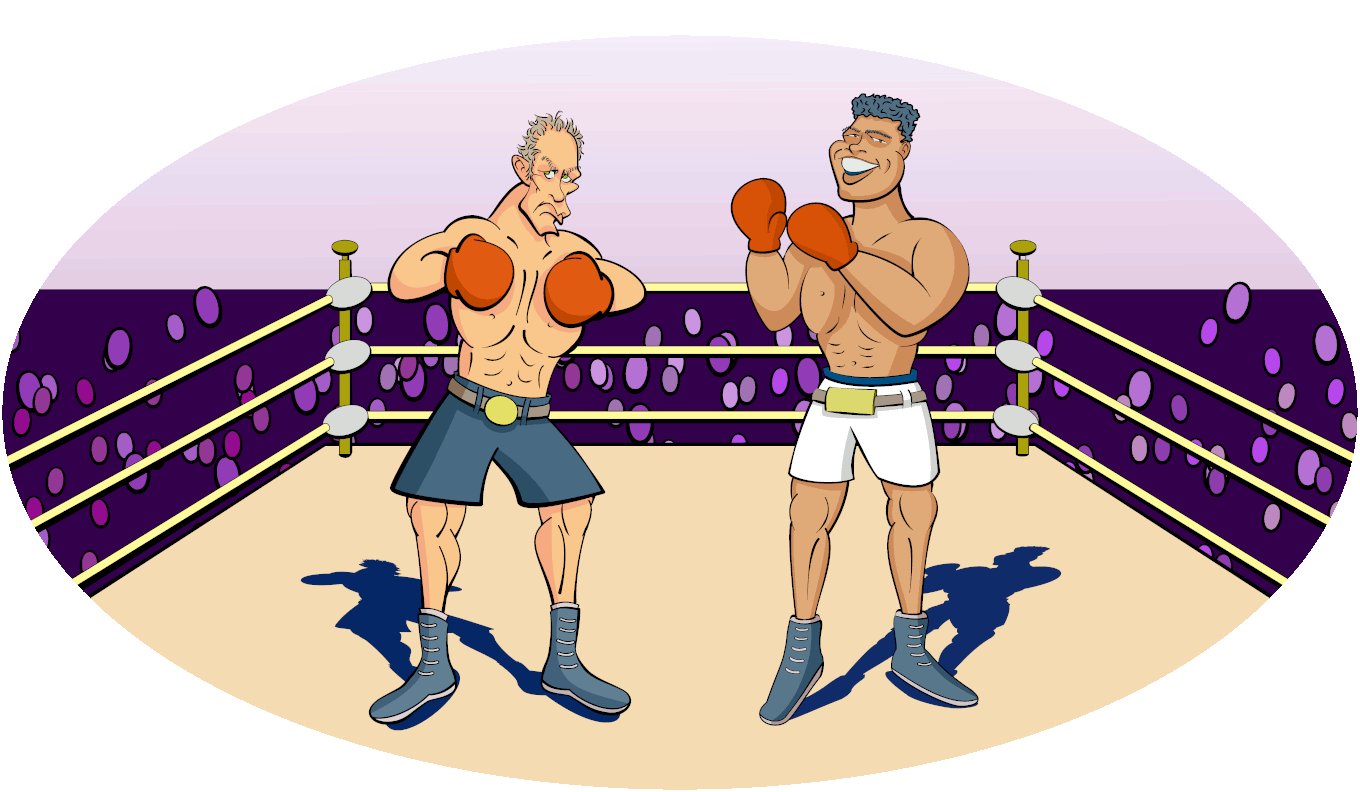
Muhammad! Muhammad Ali!
Floats like a butterfly! Stings like a bee!
Sir Henry! Sir Henry Cooper!
When he climbs in the ring, he's super-dooper!
Well, perhaps the name of the English boxer Henry Cooper is not really best adapted to poetry. But Henry has had honors and distinctions that few other practitioners of the Sweet Science have.
First of all, when Henry met Muhammad Ali1 in the ring in London's Wembly Stadium on June 18, 1963, he achieved only the second knockdown in the rising superstar's career.2 But almost immediately the bell signaled the end of the round and Muhammad was able to return to the fight and ultimately win.
Footnote
Of course at that early date Muhammad was still going by his birth name of Cassius Clay. He was named for the anti-slavery southern politician Cassius Marcellus Clay.
Footnote
The first time Muhammad was knocked down in a professional bout was by Sonny Banks on February 10, 1962. Muhammad was able to get back up and go on to win the fight.
At one point in the 9th round of Muhammad's fight with the South American Heavyweight Champion Oscar Bonavena on December 7, 1970, some of the crowd thought Oscar had knocked Muhammad down. Actually, Muhammad had just slipped and it didn't count as a knockdown. Later in the round it looked like it was Oscar who was knocked down but again it was a slip.
Then in the 15th - and last scheduled - round Muhammad did knock Oscar down. In fact he knocked him down three times. As there was the three-knockdowns-and-you're-out rule, Muhammad was declared the winner by a knockout.
After the fight, Oscar came up and congratulated Muhammad on his win.
Or rather the fight was stopped because the referee ruled that Henry could not safely continue. In the second round, one of Muhammad's punches had inflicted a small cut below Henry's left eye. The cut became aggravated in the next round and began noticeably to bleed.
But it was in the fourth round that Henry maneuvered Muhammad toward the edge of the ring and a left jab - for which Henry was most famous - sent Muhammad against the ropes. Muhammad then fell to the mat and the bell sounded ending the round.
At that point there is some controversy that has yet to be fully resolved. A movie camera was able to film a close-up of Muhammad as he sat in the corner. His trainer, Angelo Dundee, then seemed to have waved something underneath Muhammad's nose. A natural assumption is this was smelling salts to help Muhammad revive from his daze.
But in England the use of smelling salts in boxing matches was prohibited. However, in the United States their permitted use was a little more ambiguous, and Angelo may have thought it was OK. Still the fight was in England and if the referee, Tommy Little, had seen Angelo administering the salts, he could have ruled a disqualification and Henry would have won the bout.
However, the fight continued and the cut under Henry's eye got worse. So in the fifth round, Tommy - as a referee is supposed to do if he thinks one of the contestants is badly injured - stopped the fight. So Muhammad was declared the winner by a technical knockout.
Henry was born in London in 1934 and grew up in a council house (called public housing in the US). At school both Henry and his brothers were good at sports and they worked at odd jobs to help support the family. Of course, the war produced major disruptions in the day-to-day life and Henry and other children were evacuated from the city. But after the war and back in London, the Cooper brothers decided to give boxing a try.
As an amateur Henry racked up an impressive number of wins and in 1952 Henry represented Great Britain in the Olympics. Both he and twin brother George turned professional in 1954. Henry was definitely the better fighter and in 1959 he became the British Commonwealth Champion. He also won the Lonsdale Belt - twice in 1959 and once in 1961.
Henry and Muhammad met for a rematch on May 21, 1966, this time in Arsenal Stadium in London. The outcome was essentially the same as the first. Early in the fight Muhammad inflicted a cut above Henry's eye and it began to bleed. The cut got worse and the referee stopped the fight in the sixth round and declared Muhammad the winner, again by a technical knockout.
Henry continued to fight for another five years and by the time he retired he had amassed an impressive 40-14-1 record with 27 knockouts. His last fight was with Joe Bugner on March 16, 1971. Henry lost on points albeit with controversy as during the bout he had exhibited considerable skill and the loss was only by 1/4 of a point.
Henry's quiet and unassuming personality made him a favorite with the British public and "Our 'Enery" was twice named BBC Sportsman of the Year. He was also honored on the British This Is Your Life television show hosted by Eamonn Andrews, Eamonn himself having been an amateur boxer who had been the Irish Amateur Middleweight Champion.
Henry's honors were not limited to sports. He was named to the Order of the British Empire (OBE) in 1969, and in 1978, he was granted a Papal Knighthood3 by Pope Paul VI. Then on New Years Day, 2000, Henry became the first - and to date the only - English boxer to receive an English knighthood.
Footnote
Henry had converted to Catholicism when he married his wife Albina Genepri and he was named a Knight of the Order of St. Gregory the Great. As in English knighthoods women who are named to the Papal order are referred to as Dames and are addressed as "Lady".
Other illustrious members of the Order of St. Gregory are G. K. Chesterton (author, 1934), Roy Disney (Walt's Brother, 1998), Bob Hope (comedian, 1998), and Ricardo Montalbán (actor, 1998).
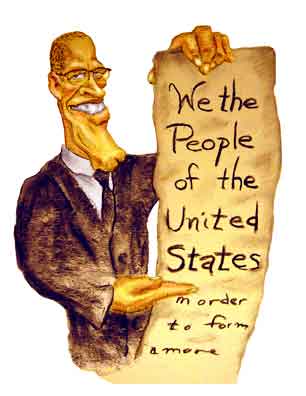
Malcolm
Of course, quiet and unassuming was the antithesis of Muhammad Ali, whose most famous quote "I am the Greatest!" was frequently, forcibly, and outspokenly put. His confidence was cheered by his black fans, but in the early years where separate-but-not-really-equal was the law of the Land of the Free, this "bragging" irritated a lot of the white public. Also just before his second fight with Sonny Liston, Muhammad joined the Nation of Islam which was then led by Elijah Muhammad (whose second-in-command, Malcom X, would soon split to form a separate group and adopt traditional Sunni Islam). The conversion of Cassius Clay and his subsequent name change didn't set well with many of the American mainstream populace. So when Muhammad entered the ring he was often greeted by a chorus of boos.
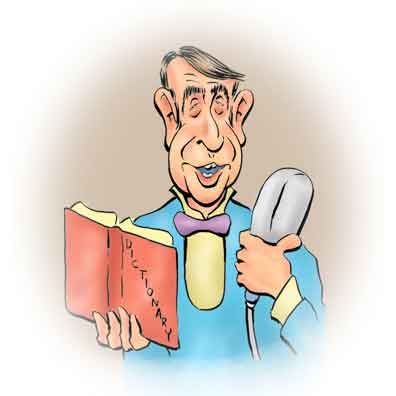
A Man Named Howard
In later years, though, more and more people - white and black - began to cheer Muhammad on (one of his early defenders - and one of the first sports commentators to address him by Muhammad rather than Cassius - was a man named Howard). As far as Muhammad's "The Greatest" self-assessment, this has been largely born out by his 56-5 (37 KO) record. To this day if you see lists of "Greatest Heavyweight Boxers" it's a good bet - that's a GOOD bet - that you'll see Muhammad at the top.
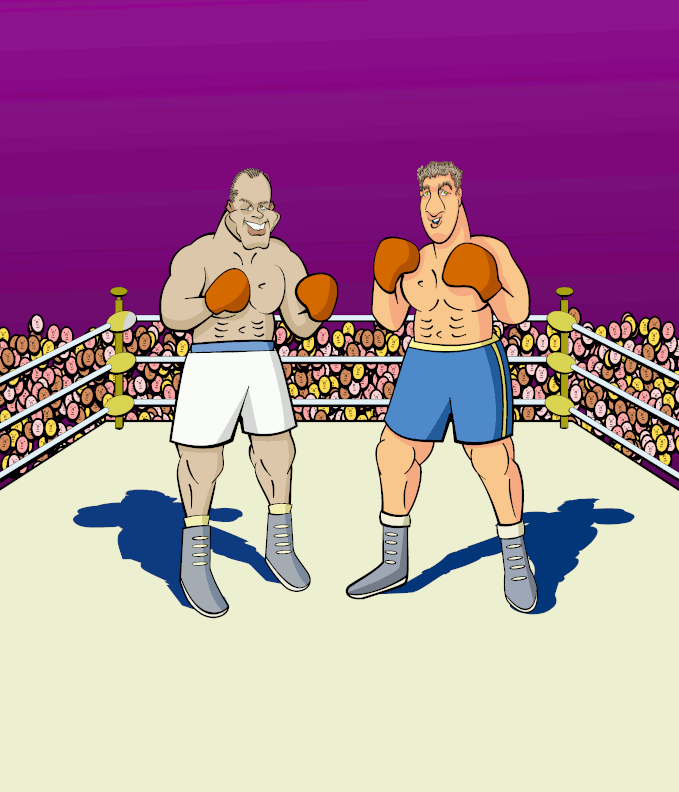
Joe and Rocky
(Click to zoom in and out)
Of course de boxingibus just as de gustibus, who is the greatest is a topic non est disputandum. There are those who would put Rocky Marciano - whose fight with Jersey Joe Walcott remains legendary - at the Top Spot with his unbeaten 49-0 (43 KO) record. Naturally Rocky and Muhammad never met at least not professionally. Then some say you can't leave out The Brown Bomber Joe Lewis with his 66-3 (52 KO) record.
Joe Louis
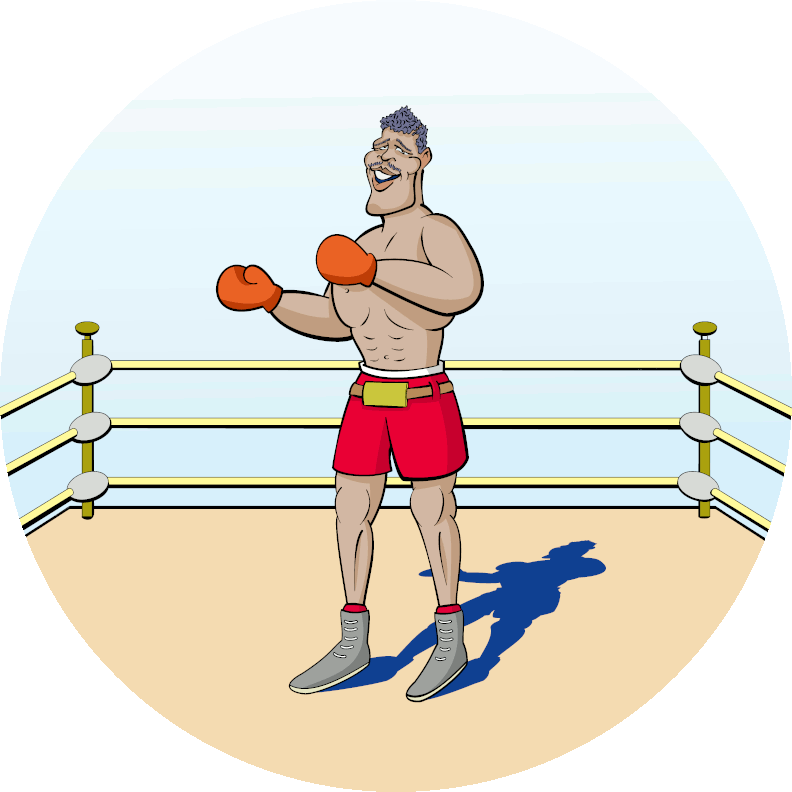
Sugar Ray
(Click to zoom in and out)
But if you include other weight classes, you might hand the Top Title to Sugar Ray Robinson who fought as a Lightweight, Welterweight, Middleweight, and Light Heavyweight to a 174-19-6 record. But for sheer stamina, you probably couldn't beat Willie Pep and many opponents didn't. Willie was a two-time Featherweight World Champion and who retired with a 229-11 record with 65 knockouts.4
Footnote
Then there's the Super-Middleweight and Light Heavyweight Champion with a 24-0 record with 21 knockouts. That is Laila Ali. Yes, the last name tips it off.
Although Henry experienced financial reverses in later years and at one time was working as a greengrocer5, he never lost his optimism and remained one of England's most popular celebrities. He and Muhammad later visited and became friends. Henry said that the verbal jabs that Muhammad threw at his opponents didn't bother him. "He always did it with a little twinkle in his eye. You could always see his tongue in his cheek, and he meant you to."
Footnote
Henry wouldn't mention how much he was paid in any given match - saying it was a matter between his promoters, his opponents, and the tax-man. But much of his boxing money was invested in what would seem to be a wise manner when he became one of the investors in Lloyds of London insurance company. Called a Lloyds' "Name", these wealthy private investors provided all the capital used by Lloyds to cover the claims.
It worked fine for a while. The people who bought Lloyds insurance paid their premiums and the Names got a nice return on their investment.
However when the financial difficulties of the 1980's rolled in, Lloyds began to run into hard times. With increasing claims regarding asbestos, tsunamis, and hurricanes, people actually demanded payment. Suddenly - as financiers say - the debits exceeded the credits. Some of the Lloyds Names soon found themselves being held accountable for paying out - not just with assets in land, manor houses, rare artworks, and stocks and bonds - but actual hard cash. That's quids, guineas, greenbacks, grand, lucre, blue cheddar, commas, wonga, half-yard, plunder, cheese, bucks, ten-spot, Jacksons, dough, roll, cake, rocks, the green, chips, dinero, yard, cabbage, blue cheese, bookoo bucks, lucci, Franklins, clams, frog skins, Benjamins, long green, guac, OPM, pesos, bread, stacks, buckaroos, shekels, nugget, cash money, brick, cash, payola, bisquick, rack, chits, scrilla, wad, turkey, bank, broccoli, monkey, bones, Gwop, G's, megabucks, tenners, Lincolns, doubloons, bands, moola, big bucks, biscuits, smackers, loot, gold, fivers, frog, lolly, chump change, cream, singles, sawbucks, knots, five-spots, coin, fetti, dead presidents, hundies, cheddar, bankrolls, bills, notes, C-notes, bacon, the dime, large, and the scratch. So a lot of Lloyds Names found themselves flat broke.
Lloyds realized they had to find some indefinitely deep pockets. So in 1994 they decided to turn to the Mega-Corporations for succor. Of course, a lot of the Mega-Corps were run by individuals who at one time could easily have been Names for Lloyds but now held their billions and billions of dollars in corporate assets which they weren't personally liable for. So the percentage of Lloyds financing soon went from 100% private individuals to 90% corporate and it remains so today.
So we see that even in a sport as demanding as boxing there is room for levity and humor. So it would not be amiss to count out with a few boxing boners.
What does a boxer like to drink?
Punch.
Why do boxers often lose their tempers?
They never want to count to ten.
Why is hard to tell one elephant boxer from the other?
Their trunks are the same color.
And of course there's:
Why did Jackson Pollock never try boxing?
He always ended up all over the canvas.
References and Further Reading
Sir Henry Cooper: A Boxing Knight, Ralph Oates, Candy Jar Books, 2025.
"Henry Cooper: The Authorised Biography of Britain's Greatest Boxing Hero", Robert Edwards, BBC Collection, 2002.
Henry Cooper's Book of Boxing, Henry Cooper, Barker Publishing, 1982.
"Palace Pride for Sir Henry", BBC, February 22, 2000.
"Arise, Our 'Enery", BBC, December 31, 1999.
"Sports News Briefs", The New York Times, May 31, 1978.
"Henry Cooper Blog Competition Co-Winner", Ewan Breeze, British Vintage Boxing, March 14, 2021.
"The Secret Battle at Lloyd's: Forgetting Your Names", Ryan Hewlett, Insurance Post, October 28, 2018.