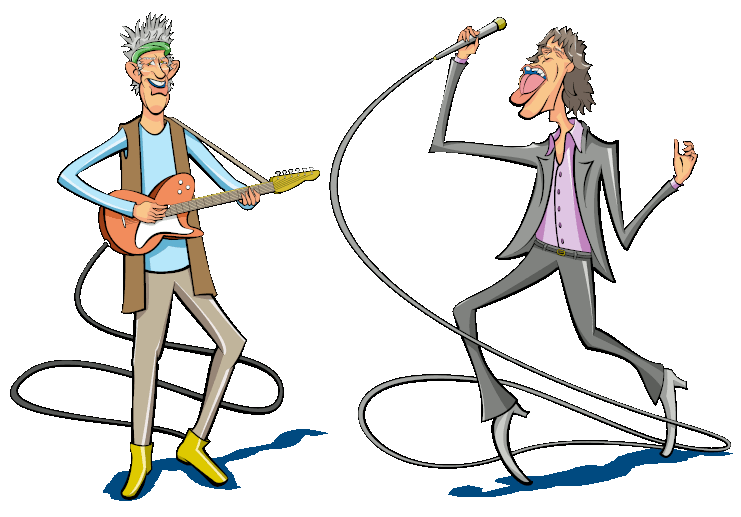
Robert Johnson
(Click on the image to zoom in.)
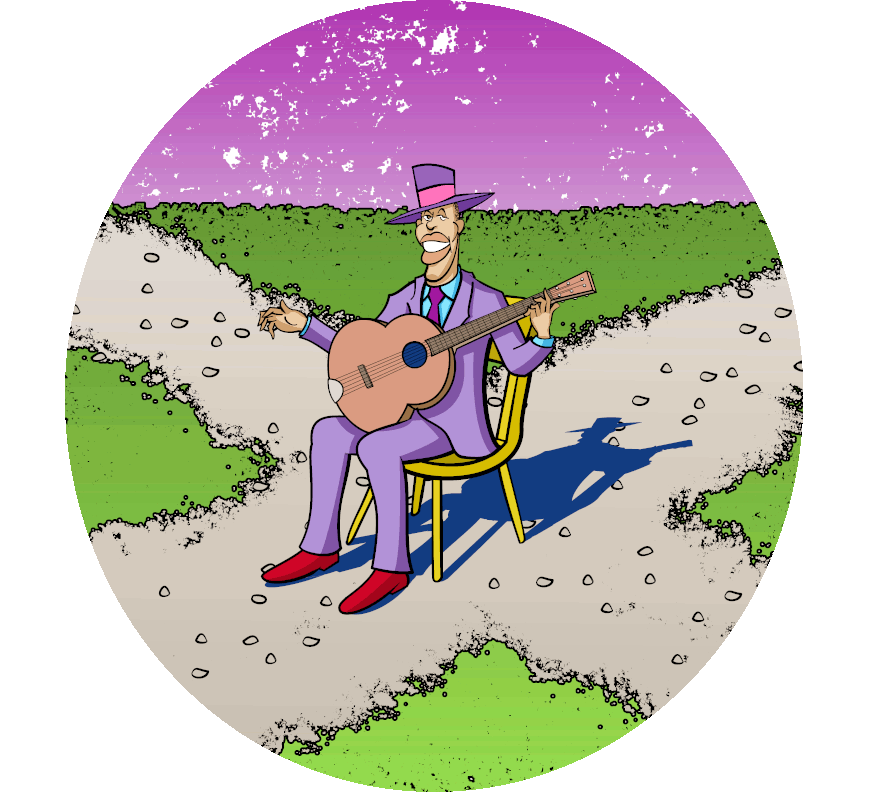
"Johnson was a b*llsh*tt*r."
- David "Honeyboy" Edwards
Although it's unlikely that Robert Johnson achieved his skill as a master Bluesman by going down to the crossroads and selling his soul to the Devil, it is possible that he said he did. After all, if you get fed up with people asking you how you acquired your musical proficiency and telling them it's a matter of practice, finding good teachers, and working hard, what else are you going to say?
Robert Johnson was born in Hazlehurst, Mississippi, which is about 35 miles south of Jackson and 100 miles north of Baton Rouge, Louisiana. The year was 1911 or maybe 1907, 1909, 1910, 1912, or some other year. His tombstone - or rather his "memorial marker"1 - says May 8, 1911.
Footnote
Some people also consider the word "graveyard" and even "cemetery" rather gauche and prefer to use "memorial park".
Robert was born on the family farm. His mom, Julia Major, married Charles Dodds in 1889, and after 10 previous children, she had Robert Johnson.
Ha?2 Julia married Charles Dodds and her 11th kid was Robert Johnson?
Footnote
Julius Caesar, Act I, Scene II, William Shakespeare, Publishers: Edward Blount and William and Isaac Jaggard, 1623.
Is't possible?3
Footnote
Julius Caesar, Act IV, Scene III, William Shakespeare, Publishers: Edward Blount and William and Isaac Jaggard, 1623.
Well, that's where things get a bit complicated. Charles and Julia actually lived pretty well. Charles owned his own land and also was a furniture maker and businessman. Most of the other Black farmers were sharecroppers who rented their farms and for payment turned over a portion of their crops to the landlord.4
Footnote
Because sharecroppers had little actual cash, they had to live on credit from the local stores which were often run by the plantation owners - the so-called "company stores". A tally was kept of what the family purchased during the year and the debt was paid off once the crops came in.
The amount the family harvested each year was credited to their debt. It became a common and deliberate practice for the store manager to juggle the books so that the credits never quite cleared the debits. So the farmers couldn't move away even if they wanted to. Such a financial system was known as debt bondage. Because the families couldn't move away unless the debt was paid, debt bondage was one way to preserve the culture of slavery long after the statutory institution was ended. Interestingly, debt bondage was also common in the early days of the Ancient Roman Republic, but it was abolished as early as the fourth century BCE.
Sometimes the shoe was on the other foot due to a similar practice called the "consignment system" particularly during America's Colonial Era. Rich landowners would buy fancy items from England and pay for the purchases by having a broker use the proceeds from the sale of plantation crops. But the planter inevitably found that the sales never quite covered the cost of what they bought and they found themselves falling further and further into debt of which they also had to pay interest. One gentleman who fell prey to this system and ultimately switched to buying and selling locally was a young farmer named George Washington.
But this was still the era of segregation and in the Deep South. The separation of races often led to violent confrontations and at some point Charles found himself in contention with two local white men and this led to murmurings of retribution.
In fact, things got so hot that Charles fled across the state line to Memphis and began taking the name of Spencer. Julia and the kids remained in Hazlehurst and she gradually began sending them to stay with Charles. Then as time went on and before Robert was born, Julia had begun, well, "associating" with a man named Noah Johnson. Nevertheless, when Robert was born he was known as Robert Dodds.
Eventually Julia joined Charles in Memphis and he didn't seem to be too concerned about his wife's amiable relationship with Noah. After all by now he himself had a girlfriend named Serena and a couple of new kids to boot. In fact, for a while Julia and the kids lived with Charles and Serena.
But not unexpectedly such living arrangements began proving unsatisfactory - if anything it must have been crowded - and Julia moved back to Mississippi and set up housekeeping in Robinsonville about 35 miles south of Memphis.
Robert, though, stayed with Charles, and he didn't see his mother for several years and even then it was by accident. He and his sister were in downtown Memphis when his sister saw Julia and said "That's Mama." Julia then took Robert back to live with her and her new husband - no, not Noah, but a man named Willie "Dusty" Willis.
Robinsonville was the home of one of the remants of the Old South. This was the Leatherman Plantation and many of the Black citizens worked for Leatherman. But they also would travel to other farms and plantations if work got slack. The work was, as you might guess, hot, dirty, and low-paying.
Dusty and Robert didn't get along. It wasn't simply the tension that can exist between kids and a step-parent. Instead Robert seems to have had no interest in being a sharecropper and spending the rest of his life picking cotton in 100 degree weather and 90% humidity. In fact, Robert didn't even want to help out around the house.
Huh! What a lagabout! If the kid showed any interest in anything it was just playing on the harmonica or the "diddley-bow".
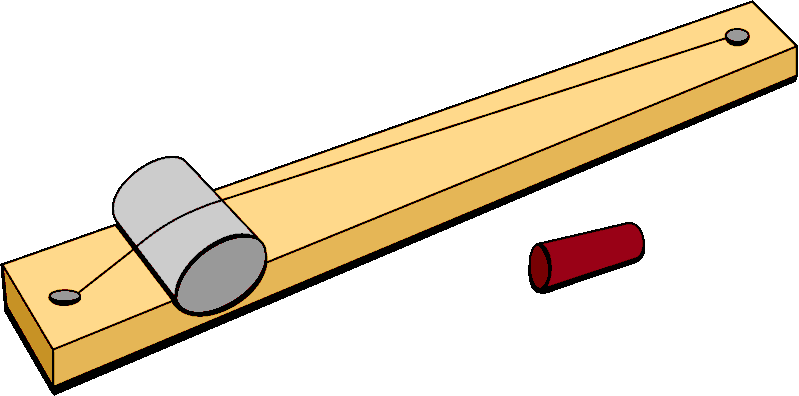
The Bow, Diddley
The diddley-bow was fashioned from a single piece of wire stretched between two nails on a board. Similar to a number of single-stringed West African instruments and serving as a sort of a proto-guitar, the diddley-bow was often the first introduction that young Black kids to playing a musical instrument. The wire is kept above the board by placing a tin can between the wire and plank with the can also serving as a resonator. Notes are played by plucking the string with the fingers or a pick. Pitch is varied by pressing or sliding a piece of metal or a glass bottle along the wire. Some diddley-bows are made simply by nailing the wire to a post or even on the outside wall of a house (but kids, don't try that at home).
As Robert showed decreasing interest in working on the farm, the relationship between Dusty and Robert became unpleasant and even fractious. Robert also began doing two things that may have irritated Dusty even further. First Robert began using the name of his biological father, Johnson. Then to get away from the house (and the fields) entirely, Robert began to frequent the many "juke joints" along the roads and in town - an activity that Dusty had completely forbidden.
Juke joints - where we get the increasingly quaint (and forgotten) term "jukebox"5 - were restaurants or taverns where in addition to providing food and drinks, there was music, dancing, and (often) gambling. Juke joints refer specifically to such establishments patronized by Black customers and were the primary secular venues where men and women got together after work and on weekends. Even well past the age of electronics when good music didn't necessarily have to be live music, the music in juke joints was often provided by live performers.6
Footnote
Jukeboxes were automated music playing devices set up in public locations and were common from the 1930's up to the 1970's. After 1949, a typical "box" would hold about fifty of the old style "45 platters" for a total of 100 songs. By necessity jukeboxes were large - five feet tall was common, nearly as wide, and perhaps two feet deep - and some had glittering pulsating lights for reasons no one can quite fathom.
To play a jukebox you would insert a coin - a nickel, dime, or a quarter - into a slot and push buttons with the names of the songs you wanted to hear. You could queue up as many songs as you wanted.
Most jukeboxes had a large glass window where you could see the rows or stacks of records. You could watch the mechanical arm move along and pull out the selected record. The arm would place the record on a turntable and the record would then play.
Although they have now largely vanished except in specialist nostalgia establishments, there was a time when scarcely a restaurant or cafe didn't have its jukebox. But with the onset of the digital age when people could carry a library of recordings literally in their pockets, this venerable institution faded and came to an end.
Footnote
In the era of segregation, the churches were probably the most important - and respectable - social institutions available to the Black community and in many locales remain so. There would generally be functions several times a week which brought the people together. Ironically the church was also important to the development of the Blues as many of the best Blues singers got their start singing in the church choirs. And what is now called "gospel" music originated in the segregated churches of the South.
Of course, things were often far from perfect and jokes and tales abounded about the local ministers who would deliver the sermon on Sunday and be out filching from the hen houses and corn silos on Monday. As ministers often had few official duties during the week they would occasionally pay visits to the sisters of the congregation when their husbands were out working in the fields. So the picture of the venal and hypocritical "preacher man" quickly found its way into the secular songs.
Some folks say that a preacher won't steal
But I caught two in my corn field.
One stole wheat and one stole corn.
And another's at the juke joint blowin' his horn.
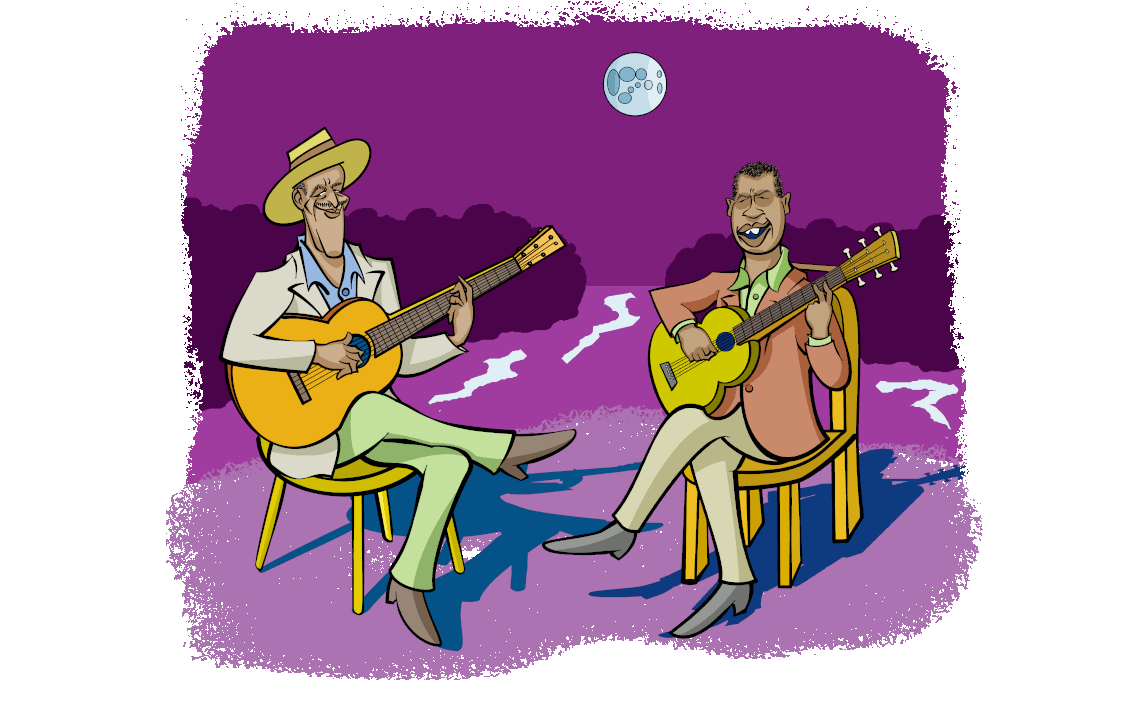
Son House and Willie Brown
Masters of the Art
(Click to zoom in and out.)
It was in the juke joints around Robinsonville that Robert would hear the master Bluesmen like Son House and Willie Brown sit on the platform for an evening and pick up a nice bit of change - not to mention free drinks and food. Son remembered that Robert could play Blues harmonica but if he attempted to play a guitar, he wasn't very good.
In fact he stunk. Son said that when he and Willie would set down their guitars to take a break and cool off - the juke joints weren't air-conditioned - Robert would pick one up and start to play. Robert's fumbling attempts literally drove the customers away.7
Footnote
Another legendary performer who started out rather roughly was Be-Bop saxophonist Charlie Parker. At first he was so bad that when he wanted to sit in with other musicians, they wouldn't even let him play. But rather than be discouraged, Charlie began to put in long hours of practice and soon got to the point that he became the acknowledged master of the jazz saxophone.
It was in 1929 when he was about 17 that Robert married a local girl named Virginia Travis. Of course with a wife to support the new situation necessitated him to actually start working on the farm. The marriage, though, was short. The following year Virginia died while giving birth to their child who also did not survive.
Virginia's parents blamed Robert. Possibly they thought his interest in playing "the devil's music" had led to divine retribution. On the other hand their ire might have been of a more workaday origin as Robert could have been taking trips away from home to learn the music. So Virginia's family would see Robert as less a fledgling artist seeking instruction than a husband whose neglect led or at least contributed to their daughter's early demise.
But now there was one thing that Robert was sure of. He was not - that's NOT! NOT! NOT! - going hang around and make his living picking cotton. Despite his not even owning a guitar and barely being able to play, Robert still harbored hope of being a Bluesman. But he could not achieve this goal living in Robinsonville and being the butt of jibes and sneers. So he headed off.
Then comes the mystery. When Robert got back he could PLAY! Son House remembered he and Willie were performing at a joint in Banks, Mississippi, a few miles east from Robinsonville when Robert came in toting a guitar. Son laughed and asked what was he doing with that. Robert told him to move over and he'd show him. Son's jaw dropped when Robert began to play top-notch Blues. But after that night Son never saw Robert again.
People scratched their heads in bewilderment. How could Robert - whose playing had literally driven people away - now hold his own with the old masters?
Some people thought there was only one way. Robert MUST have GONE DOWN TO THE CROSSROADS where Tommy Johnson - no relation to Robert - told us what happens:
If you want to learn how to play anything and learn how to make songs yourself, you take your guitar and you go to where a crossroad is. Get there just before midnight. You have to go by yourself and be sitting there playing a piece. A big Black man will walk up there and take your guitar, and he'll tune it. And then he'll play a piece and hand it back to you. That's the way to play anything."
And that's what a lot of people thought Robert did.
But where did the story come from?
There is only one reference about Robert's midnight trip to the crossroads from anyone who knew him personally. That was from Son House who was quoted as saying that Robert "sold his soul to the devil in exchange for learning to play like that." But as to where Son learned the story, the most likely source was Robert himself.
Of course, it all might have started off as a joke. The old selling-your-soul-to-get-what-you-want stories go back centuries. And Robert was an entertainer and entertainers like to tell stories.
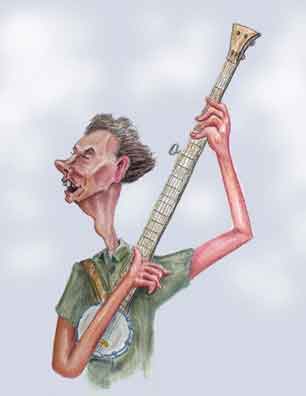
Pete Seeger
He wasn't half bad.
There is, of course, a far less mystical explanation to Robert's new-found skill. Although there are stories that Robert was gone from Robinsonville only six months, modern scholars seem to think the time was more like two years. A talented musician who worked hard and practiced a lot could learn to play within that span or even less.
And it would certainly help if Robert met other Blues players on his travels. As a teenager Pete Seeger learned to play the banjo by hitchhiking around the South during one summer. In his travels he met and learned from the banjo players who had recorded for the Library of Congress. By the time he returned to New York, he wasn't half bad.
Certainly in his travels Robert could have visited the best musicians and watched how they played and learned their songs. Experts can also show the student tricks that aren't immediately obvious. There was one time when a banjo player had been having trouble playing a passage from an Earl Scruggs record and he went to a bluegrass festival where Earl was appearing. He simply walked to the parking lot and into the tour bus where Earl was sitting and eating a banana. He asked Earl about the passage and played the tune. Earl said he was getting all the notes in but was making it too difficult. He took the banjo and showed there was a simpler way to work the left-hand fingerings.8
Footnote
Many aspiring guitarists find considerable frustration trying to play a song as it sounds on a record or in a concert. Then they are much relieved when they find out the song is played in a non-standard tuning which simplifies the fingerings and produces the correct sound.
Also sometimes a song in concert or on a recording will seem to have a fuller richer sound than when attempted by the beginner. One way to achieve his effect is by dropping the pitch of the strings. So instead of tuning the guitar to E2-A2-D3-G3-B3-E4 (A4=400 Hz) you can use D2-G2-C3-F3-A4-D4. You can also get a richer sound simply by dropping the low E string a step. For some reason the low D2 seems to resonate more naturally on an acoustic guitar.
It's also possible to get a fuller sound by using an "open" tuning. Open tunings are where the strings are tuned to play a chord - usually a major chord - without pressing any strings. If Robert's records accurately reproduce the pitch he might have played with an open-A tuning E2 A2 E3 A3 C3# E4. However, as the recording equipment at that time didn't always have consistent turntable speeds, he may have used an open-G tuning a step lower: D2 G2 D3 G3 B3 D4.
By 1931 Robert was living the life of the traveling bard - "itinerant musician" as the eggheads call it. Travel was by hitchhiking, hopping a freight train, or simply walking. Accommodations were usually in private homes or if necessary on park benches and under the trees. Then when Robert arrived in a town he'd set up on a street corner and "busk" as it's now called. This would generally bring him some quick cash but more importantly it brought him to the attention of people who needed music for a party or a juke joint. Robert didn't just play Blues but also the pop tunes and even jazz and "hillbilly" music.
Robert's travels took him as far north as Chicago and Detroit but he would inevitably find his way back to Mississippi. In 1936 he was in Jackson and stopped by the store owned by Henry Columbus Speir. H. C. (as everyone called him) sold furniture but that included phonographs. Of course, if you bought a phonograph you needed records, too, and H. C. would supply those as well.
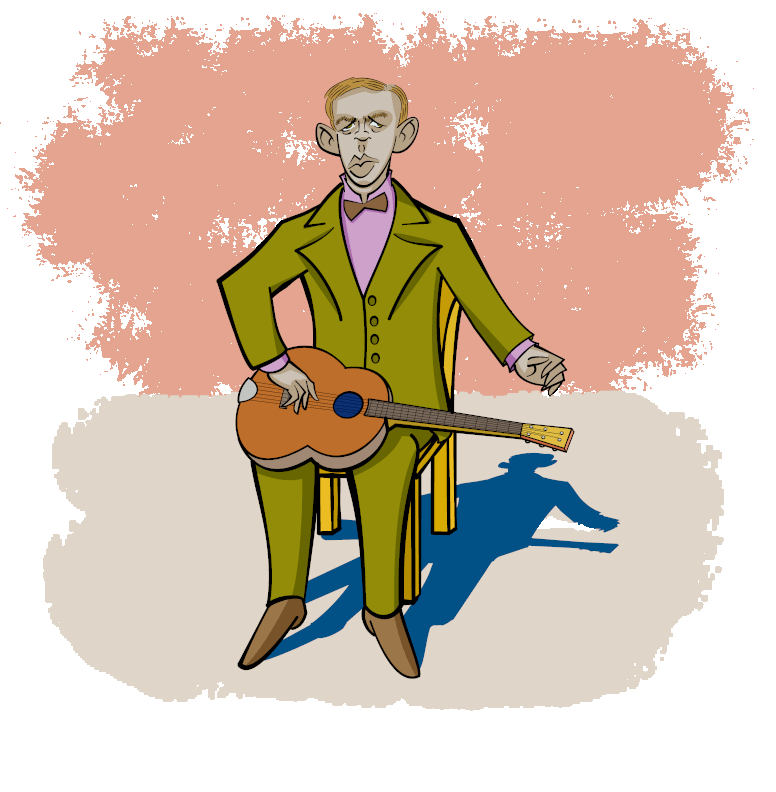
Charley Patton
(Click to zoom in and out.)
As a vendor of records, H. C. was in touch with the major companies like Okeh, Victor, Decca, and Paramount. He also served as a scout for the companies. He kept a recording machine in his store and he would make demonstration records of promising players. It was H. C. who had put the record companies in touch with Son House, Charley Patton, and Skip James, all of whom released recordings in the 1930's. He also heard Jimmie Rodgers play but didn't think he was good enough to bother with.9
Footnote
H. C. was wrong, of course. Jimmy Rodgers became one of the biggest country and western stars - and Blues singers - in history.
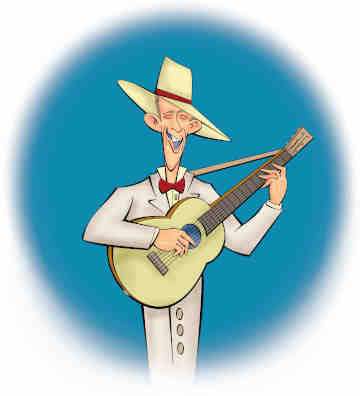
Jimmy Rodgers
He was good enough.
It's not clear if Robert cut a demo (if he did it's never been found). But H. C. was certainly impressed with Robert, not just his playing but his ability to make up new songs. So when Ernie Oertle from the American Record Corporation showed up, H. C. recommended he contact Robert. After hearing Robert play, Ernie said he should go to San Antonio which was a center of a variety of styles including Blues, Country and Western (then called "hillbilly"), and Hispanic music. There he could record some sides for Don Law who was then a young engineer and producer.
Robert made his first records at the Gunter Hotel in San Antonio on November 23 through the 25th, 1936. One was, of course, "The Crossroads Blues". And no, in the song there is no reference to selling his soul to the Devil. But Robert's biggest seller was "Terraplane Blues". The exact number isn't known but estimates are between 5,000 and 10,000 copies - a goodly number for the time.
The next year Robert traveled to Dallas where on June 19th and 20th he cut some more records at the Vitagraph Studios. All in all, Robert recorded 29 songs. How much Robert got paid is - like so much about him - unknown. Possibly he got a modest lump sum per session. Royalties were certainly not really a matter up for discussion.
Robert returned to his life of the traveling musician. As before he played on the streets and in juke joints. After he began to feel a bit stale, he'd move on. At the start of 1937 he was only 25 and could expect many more years of playing.
Unfortunately it was not to be. People who knew Robert said he was actually a pleasant person, although at times a bit moody. But he had a weakness for the women and for the drink. Like the Blues tell us, these have led to the downfall of many a man.
One thing is certain about Robert Johnson's death is that no one knows what happened. No one even knows exactly when. One scholar who spent years meticulously researching Robert's life said he probably died on August 16, 1938. Or at least that's the date on the death certificate which wasn't found until 1968 and about which some scholars seem a bit dubious.
The document does correctly state Robert's birthplace was Hazlehurst, Mississippi, and his parents were Noah Johnson and Julia Major. It also states that the decedent was a musician who had been working for 10 years. The last time he worked at his profession, we read, was the past July.
And it must be emphasized, no one - that's NO ONE - knows the cause of death. Some say there was no cause of death recorded. Other scholars, though, point out the death certificate states Robert succumbed to syphilis.
The confusion arises because under the "Cause of Death" heading there is nothing written except the words "No Doctor". So officially there was no cause listed. But on the back someone wrote a note. It stated:
I talked with the white man on whose place this negro10 died and I also talked with a negro woman on the place. The plantation owner said this negro man, seemingly about 26 years old, came down from Tunica [Robinsonville] two or three weeks before he died to play a banjo at a negro dance given there on the plantation. He staid (sic) in the house with some of the negroes saying he wanted to pick cotton. The white man did not have a doctor for this negro as he had not worked for him. He was buried in a homemade coffin furnished by the County. The plantation owner said it was his opinion that the negro died of syphilis.
Footnote
Some people feel the word is disrespectful but before the use of "Afro-American" from the 1960's or "African American" in the 1990's became common, the respectful designation for those of sub-Saharan African ethnicity was "Negro" and was the word routinely used by early Civil Rights leaders including Martin Luther King.
However, before the 1960's the word was rarely capitalized even by people who were trying to be respectful. In the original edition of the James Bond novel Live and Let Die published in 1954, the word used is spelled "negro" although a few printings did capitalized spelling as "Negro". It should be noted that the author Ian Fleming was doing his best to show his open-mindedness and liberality toward racial relations although by today's standards that's not all that evident. In the American editions the editors felt compelled to remove some of the more objectionable material.
Recently the editors of the James Bond books have revised the books to make them more suitable for post-Millennium sensibilities. This decision was not without controversy as some fans feel that part of the enjoyment of the novels is reading about James Bond and his far from perfect philosophy of life. However, some books - like Casino Royale - were not altered at all.
The problem with the added note is obvious. For one thing, a plantation owner's opinion isn't an official cause of death. Next, no one knows who or when the addition was written. The writer's sources were also obviously inaccurate. Robert did not play the banjo nor was he playing at a plantation dance. And one thing we do know is that Robert did NOT want to pick cotton.
Some people may say, well, heck, just do a post-humous forensic examination. The problem is that an autopsy made nearly a century after the burial is almost sure to reveal nothing. Even more of a problem is that there are three different cemeteries that claim to be Robert's final resting place and three different tombstones that claim to be his. Also it appears from the photographs that none of the markers are original.
In the end the scholars have to fall back on what people who knew Robert said. The most popular claim is Robert was murdered by the owner of the juke joint he was playing at. Supposedly Robert was being too familiar with the gentlemen's wife. Naturally the husband was not pleased, and so he put in a bit of strychnine into Robert's whiskey. Quote - "supporting evidence" - unquote - for this story is that Sonny Boy Williamson claimed to be present when Robert died and that in his last hours Robert was crawling around barking and howling like a dog . If this is what happened, Sonny might have been describing someone in the throes of a convulsive poison.
There are, of course, variants in the story of Robert's last hours, days, or weeks. If you still like the poisoning story but don't like the idea that Robert was a-messin' around, you can take the story that he was poisoned accidentally by one of his girlfriends with the picturesque name of "Craphouse" Bea. Accidental poisoning is a real possibility since poorly manufactured bootleg liquor can be poisonous and bad bootleg has been responsible for cases of blindness, death, or both. As much of the liquor served in juke joints was moonshine, it's certainly possible that Robert was given a bad batch by accident.

Moe Asch
Today Robert Johnson has achieved iconicity bordering on deification. But how did this happen? Yes, some of his records sold well during his lifetime, but it wasn't until 1959 that one of his songs was available to modern listeners when "Preachin' Blues" was included on the compilation album, Country Blues, from Moe Asch's Folkways label. It was only in 1961 that Columbia released an album of sixteen about Robert's songs.
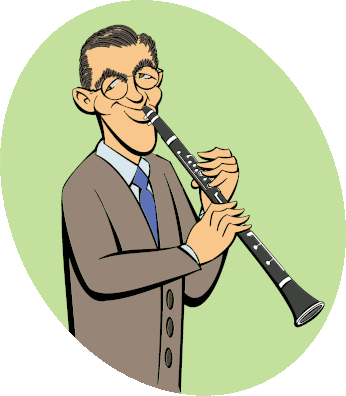
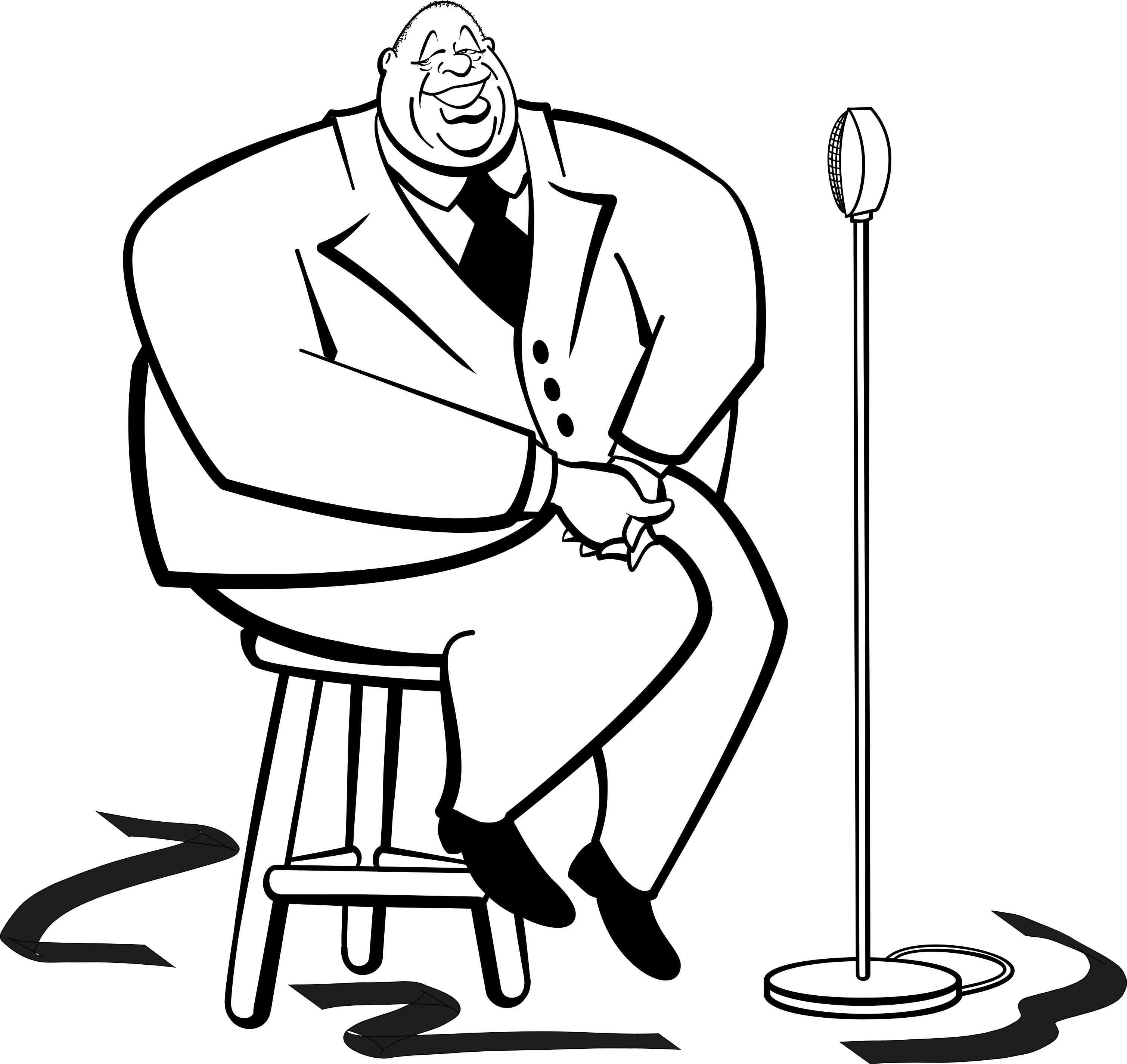
Benny Goodman
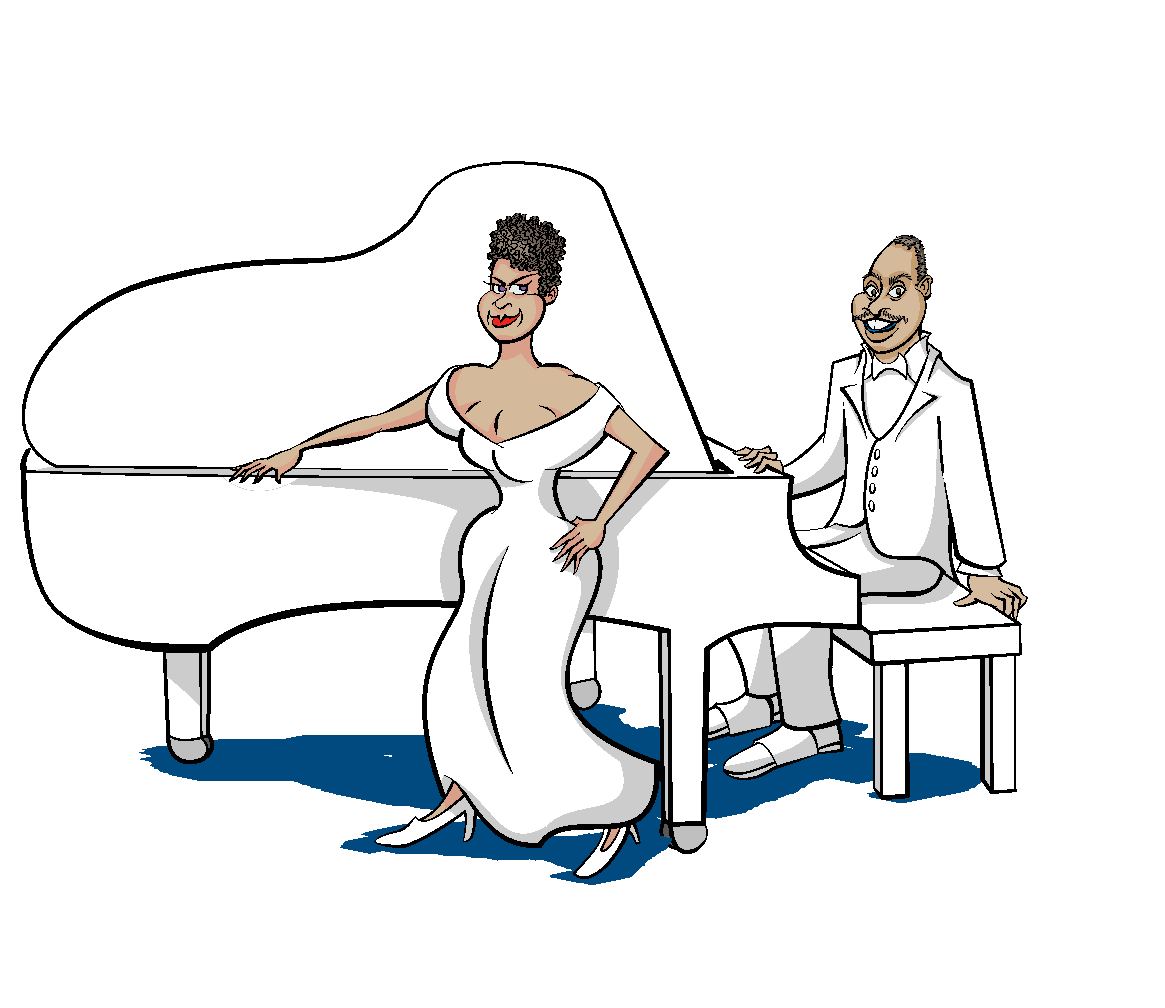
Count Basie and Ruth Brown
(Click to zoom in and out.)
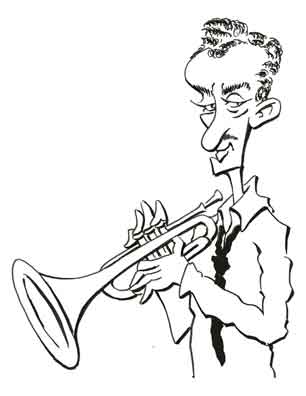
Harry James

Billy Holiday
(Click to zoom in and out.)

Aretha Franklin
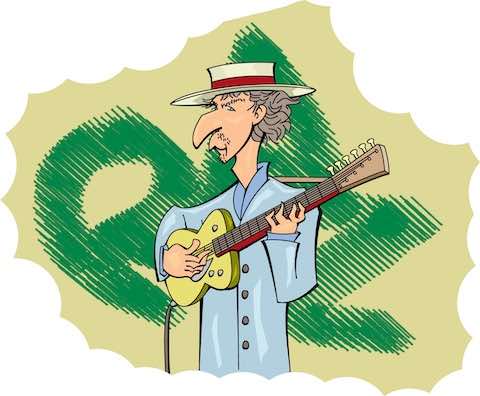
Robert
But if he wasn't famous what prompted Columbia to release an album of Robert's records in the first place? Well, Robert's modern fame is due to the efforts of John Hammond, a record producer who literally was all over the music industry from the 1930's well into the 1980's. Among the musicians that he discovered or whose work he promoted were clarinetist and big band leader Benny Goodman, pianist Fletcher Henderson, trumpet player Harry James, guitarist Charlie Christian, Big Band leader Count Basie, Blues singer Billie Holiday, banjo player and folk singer and banjo master Pete Seeger, Queen of the Blues Aretha Franklin, Bruce Springsteen, and a future Nobel Prize winner named Robert Zimmerman.
John had been in the forefront of bringing respectability to popular music. Born into a wealthy East Coast family, he combined an interest in furthering the rights of minorities and ending segregation with an interest in music. He became an early jazz enthusiast and after moving to Greenwich Village in the early 1930's, he began organizing jazz programs and concerts. He also hosted radio programs where he invited musicians to appear regardless of their race.
John soon moved to Columbia records as an artists and repertoire (A&R) executive and producer. Columbia owned Robert's records and so John learned of Robert's music.
One thing John had was musical knowledge (he was playing piano by the time he was four) and enthusiasm. On December 23 and 24, 1938, he produced a double concert at Carnegie Hall titled "From Spiritual to Swing". Included in the program were Benny Goodman and Count Basie but he also brought on Blues singers like Sonny Terry, Big Bill Broonzy, and "Mr. Five-by-Five" Jimmy Rushing.
The original idea was that Robert would be one of the performers but of course he had died earlier that year. So instead John played two of Robert's records over the sound system. That was the first time Robert's name and his playing appeared in a major musical forum.
But here's what seems strange. Despite Robert's music being heard at Carnegie Hall, he didn't come onto the radar screen until 1959 - over 20 years after the concert. And even that was just when his song appeared on The Country Blues album. This album, like many of Folkways releases, did not see wide circulation and Robert was just one of more than a dozen other singers on the record.
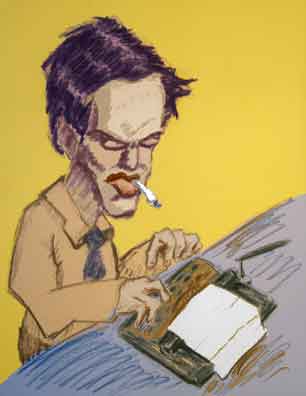
Alan Lomax.
Alan Lomax, the folk song expert and collector who served as the director of the Archive of Folks Songs at the Library of Congress from 1936 to 1942 said that like John, he had recognized Robert was one of the most important Blues singers of the 20th Century. As he put it:
John Hammond, the patron of Black jazz, put me on to Robert Johnson. He had discovered the unpublished masters when he went to work for Columbia Records. Later on, one memorable evening in 1939. as I played through Columbia's stock of "race records," I found this same batch of recordings. All alone that weekend in that New York office building, I played and replayed these masterworks. Recently, all of Johnson has been reissued on CD and he has won international recognition. But in 1939 only a handful of us appreciated him. At that time I was surveying all of the so-called race catalogues of the major record companies, and it was clear that Johnson's recordings stood out as the finest examples of the Blues along with those of the great Blind Lemon Jefferson in the twenties.
What's notable about Alan's account is it wasn't written until 1993. That was over 50 years after he first heard Robert's records!
So why, the scholars ask, if in 1939 Alan recognized Robert as one of "the finest examples of the Blues" and deliberately went out hunting for him and his songs, why was there no - that's NO! - KEINS! - NICHTS! - mention WHATSOEVER of Robert in Alan's massive, groundbreaking, and magisterial work, the Folk Songs of North America published in 1960? All this is decidedly strange since the Folk Songs of North America specifically references The Country Blues album and in the reference Alan called it a classic.
But even then he doesn't mention Robert. Yet he does specifically mention others on the album like Lonnie Johnson, Willie Johnson, Big Big Broonzy, John Lee Hooker, Lightnin' Hopkins, Leroy Carr, and of course, Blind Lemon Jefferson. But nowhere, that's NOWHERE, in the book does he mention Robert Johnson. This raises the question if Alan, despite his undoubted contribution to folk music scholarship, was belatedly jumping on the Robert Johnson bandwagon and indulging in a bit of hindsight prescience.
It certainly took a while for Robert Johnson to become part of American folklife. It wasn't until the year after the publication of Folk Songs of North America that John Hammond was finally able to get Columbia to issue an album solely devoted to Robert and his music. But this belated release just begs the question. Columbia had Robert's records in their archives for over a quarter of a century. What had changed?
Well, as typical of much in the Land of the Free and the Home of the Buck, it was cash, moolah, dinero, gelt, smackers. In other words, it was MONEY.
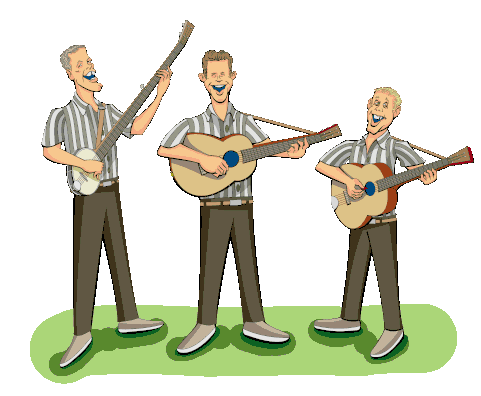
The Kingston Trio
Making It Pay
(Click to zoom in and out.)
In 1958 three crop-headed and clean-cut college kids showed how to make folk music pay. Although they started out with calypso (from which they borrowed their name), The Kingston Trio later began singing straightforward America folk songs. After a successful run at the Purple Onion nightclub in San Francisco, they released an album commonsensically named The Kingston Trio. Before the recording session ended and almost at the last minute they included a murder ballad that originated in North Carolina. This was "Tom Dooley" which quickly rose to #1 on the pop charts and kicked off what has been called the Folk Revival of the 1960's.
The Folk Music Revival quick-started an entire industry that was led by "urban" folk singers like Joan Baez, Judy Collins, Joni Mitchell, Peter Paul and Mary, and that future Nobel Prize winner named Robert Zimmerman. Folk singers not only appeared on mainstream television variety shows but there was even a nationally broadcast folk music program, Hootenanny, that ran for two years on ABC.
Although the Folk Song Revival faded after a few years its influenced remained. Today there are Grammy Categories with awards for Best Traditional Folk Album, Best Contemporary Folk Album, Best Polka Album, Best Blues Album, Best Traditional Folk Album, Best Contemporary Folk Album, Best Hawaiian Music Album, Best Native American Music Album, and Best Zydeco or Cajun Music Album. Perhaps the #1 impact of the Folk Music Revival is that it brought mainstream acceptability to Country Music which in a few years began practically controlling the national economy.
The Sixties Revival

Joan...
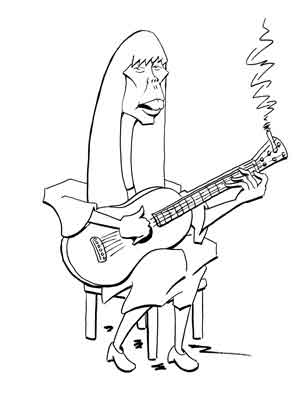
... Joni ...

... and Robert.