Rudolf Nureyev
(Click on the image to zoom in.)
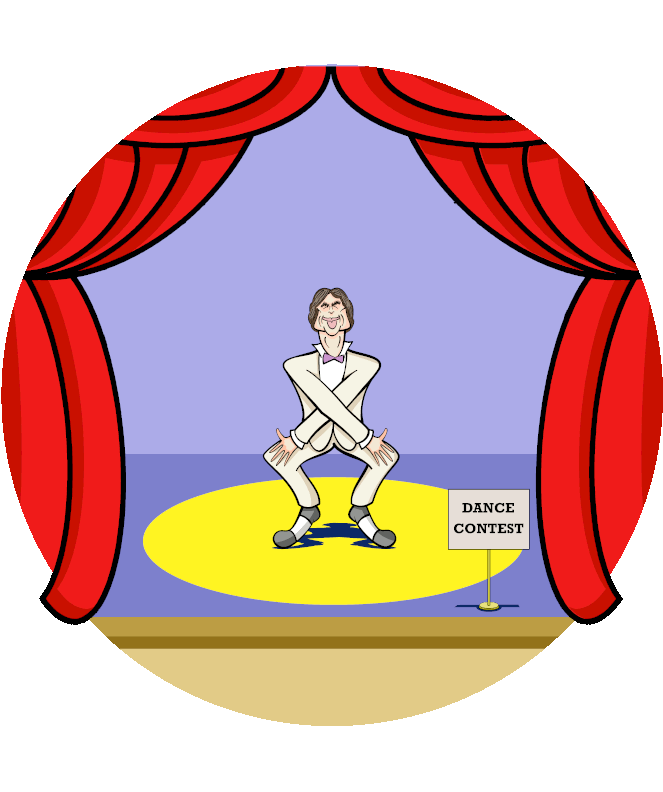
An informed consensus is that the greatest male ballet dancer of the 20th Century was Rudolf Khametovich Nureyev.1 Born and raised in the Soviet Union, he was the principal dancer for the Kirov Ballet Company and he had actually turned down a job at the even more prestigious Bolshoi. Rudolf was so good that there was even a Readers Digest about him.
After the Second World War Russian ballet was considered the best in the world. Naturally the institution was used by the Communist authorities to trumpet their self-proclaimed superiority above the Capitalist countries whose kids mostly listened to Rock and Roll.2
Footnote
That typical Russian music was better than typical American music was also an opinion shared by many American adults. Or at least Russian music was better than the music favored by American teenagers. It wasn't unusual for American teachers to chastise their students for their rotten choice in music and point out that radio shows in Russia would play an example of "typical" Russian music with something from Tchaikovsky, Mussorgsky, or Shostakovich. Then they'd play samples of "typical American music" and play Elvis, The Everly Brothers, or Jerry Lee Lewis. Naturally after hearing Tchaikovsky, Mussorgsky, or Shostakovich, American students were seldom convinced.
The irony is any such Russia - Da! / Yankees - Nyet! programs were largely self-defeating in that they were a state sponsored venue that exposed the Russian kids to Rock and Roll. So during the Cold War many young Russians became enthusiastic fans of American popular music - not just Rock but also Jazz.
Eventually the Soviet leaders bowed to the inevitable and began to allow Jazz and Rock performances in the country. In fact, in the 1980's, the Soviet Premier, Konstantin Chernenko, once took the stage at a Rock concert and did some fancy footwork for the audience. Whether it was cause and effect or not, the next Soviet Premiere, Mikhail Gorbachev, was the last leader of the Soviet Union and the Soviet Union fell apart in 1991.
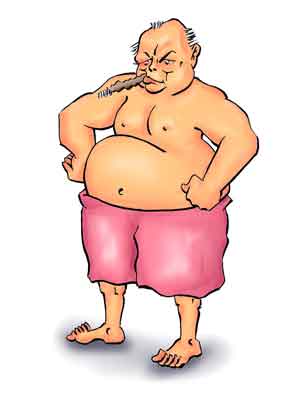
A Chap Named Winston.
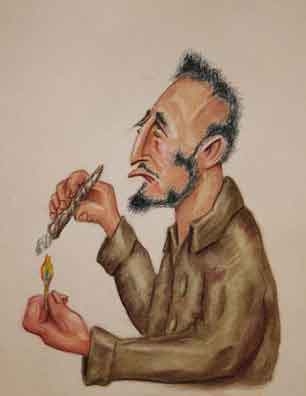
El Barbudo
Certainly at the start of the Swinging Sixties, the Soviet Union appeared to be a monolithic and unstoppable phenomenon. Communism was spreading around the Globe raising alarums throughout the West. The Soviet occupation of Eastern Europe and East Germany had been dubbed the "Iron Curtain" by a chap named Winston. Then by the end of the 1950's a Marxist government had suddenly arisen in Cuba when a rag-tag band of revolutionaries called Los Barbudos had - incredibly - driven the American-friendly Cuban leader Fulgencio Batista y Zaldívart out of the Country. Communism was literally knocking at America's door.
Then suddenly on June 16, 1961 and while the Kirov Ballet was in Paris, Rudolf defected. The message was clear. If one of Russia's greatest artists felt compelled to leave, then it seems that the Soviet System really was the repressive dictatorship that the Leaders of the West had always said it was. So a tour which had been intended to be a propaganda coup for the Soviets had turned into a public relations disaster.
Rudi - as he was called - was born in 1938 in Irkutsk, Union of Soviet Socialists Republics (USSR or in Russian CCCP3). He wasn't born at home or in a hospital but instead his parents were on the train heading to Vladivostok which is on the eastern coast of the country and just a short jump from Japan. The Nureyevs lived there while his dad was a military instructor, and after the war they moved to Moscow.
Footnote
Not pronounced as many American schoolchildren thought, see-see-see-pea. Instead in Russian you say ess-ess-ess-err. Strictly speaking the words of CCCP are pronounced something like Sayuz Sayvetskih Sohtchyalistitcheskih Respublik and spelled in Russian Cyrillic as Союз Советских Социалистических Республик. The translation is pretty much the Union of Soviet Socialist Republics.
Russia was in sorry shape. Hundreds of millions of people had been killed in the war and another 30-40 million ended up falling to the policies of Iósif Vissariónovich Dzhugashvili who later adopted a more pronounceable name suitable for puns. Things calmed down some under the slightly more relaxed hand of Nikita Sergeyevich Khruschev but times were still tough.
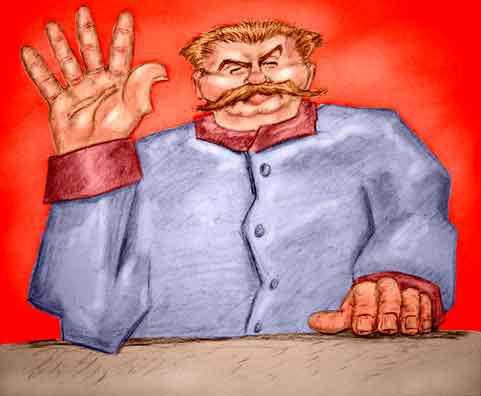
Iósif Vissariónovich Dzhugashvili
A More Pronounceable Name.
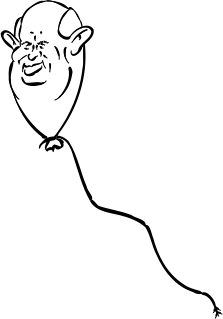
Nikita Sergeyevich
Like many families in post-War Russia, the Nureyevs were impoverished, and they had to share their apartment with other families. Rudi himself was a lonely child who was bullied by other students who saw him as a hayseed from the sticks.
But the young man did like music and began studying dancing. At first he focused on folk dance in amateur groups but then moved to the Ufa Opera Ballet. He became good enough that at age 17 he was accepted into the Leningrad Ballet School where the legendary Alexander Pushkin4 was an instructor.
Footnote
Not to be confused with Alexander Pushkin, the famous 19th Century writer. The older Alexander's most famous play was Boris Godunov which the composer Modest Mussorgsky - that's his name not a description - later turned into an opera. The main character - who was Tsar of Russia from 1598 to 1605 - lent his name, suitably modified, to the chief nemesis of a moose and flying squirrel.
Rudi showed his mettle and it was soon evident he would be a leading dancer in any professional company. He did, though, sometimes lock horns with the instructors, not only on ballet interpretations and choreography, but also because he liked to use his leisure hours for, well, for leisure hours. He particularly enjoyed the night life and became something of a reveler.
When Rudi graduated he had the choice of sticking with the Kirov Ballet in Leningrad or moving to Moscow for the more prestigious and cosmopolitan Bolshoi. The members of the Kirov told him that he would be happier in Leningrad5 and so there he remained. In performances he stood out and soon was the Rave of All the Russias.
Footnote
Today the former Leningrad is the city of St. Petersburg, and was founded by Tsar Peter I - now usually called Peter the Great - in 1703. But as the Tsars were looked down on after 1917, the city changed its name to Leningrad in 1924 following the death of the founder of Soviet Communism Vladimir Ilyich Ulyanov who for some reason preferred the name Lenin. But after 1991 the Bolsheviks were out and the Tsars were suddenly all right again. So the city was immediately redubbed to its historical name.
The name change has caused some problems with writers particularly those who wrote in the 1960's for a television show about a spaceship whose ten year mission was to go where no man (and woman) had gone before. In one episode the principal crew members find themselves held captive on a planet where all their wishes would be granted. One of the characters who was supposed to be from Russia made a comment, "This place is even better than Leningrad.". This is an example of a futuristic anachronism, a faux pas technically called a metachronism.
Life in Russia began to get better as the 50's rolled on but there was a war on - the Cold War, that is. Americans began to get decidedly nervous, particularly after one of the Soviet leaders promised that Russia would bury them.
But to show the world that the Communists were not just a bunch of latter day Attilas but were producing the Greatest Society in the World, there had been cultural exchanges with the Western countries. Russia began sending their own artists to perform for audiences in the West and in general people were impressed. Exchanges go both ways, of course, and in 1959, Leonard Bernstein and the New York Philharmonic went to Russia.
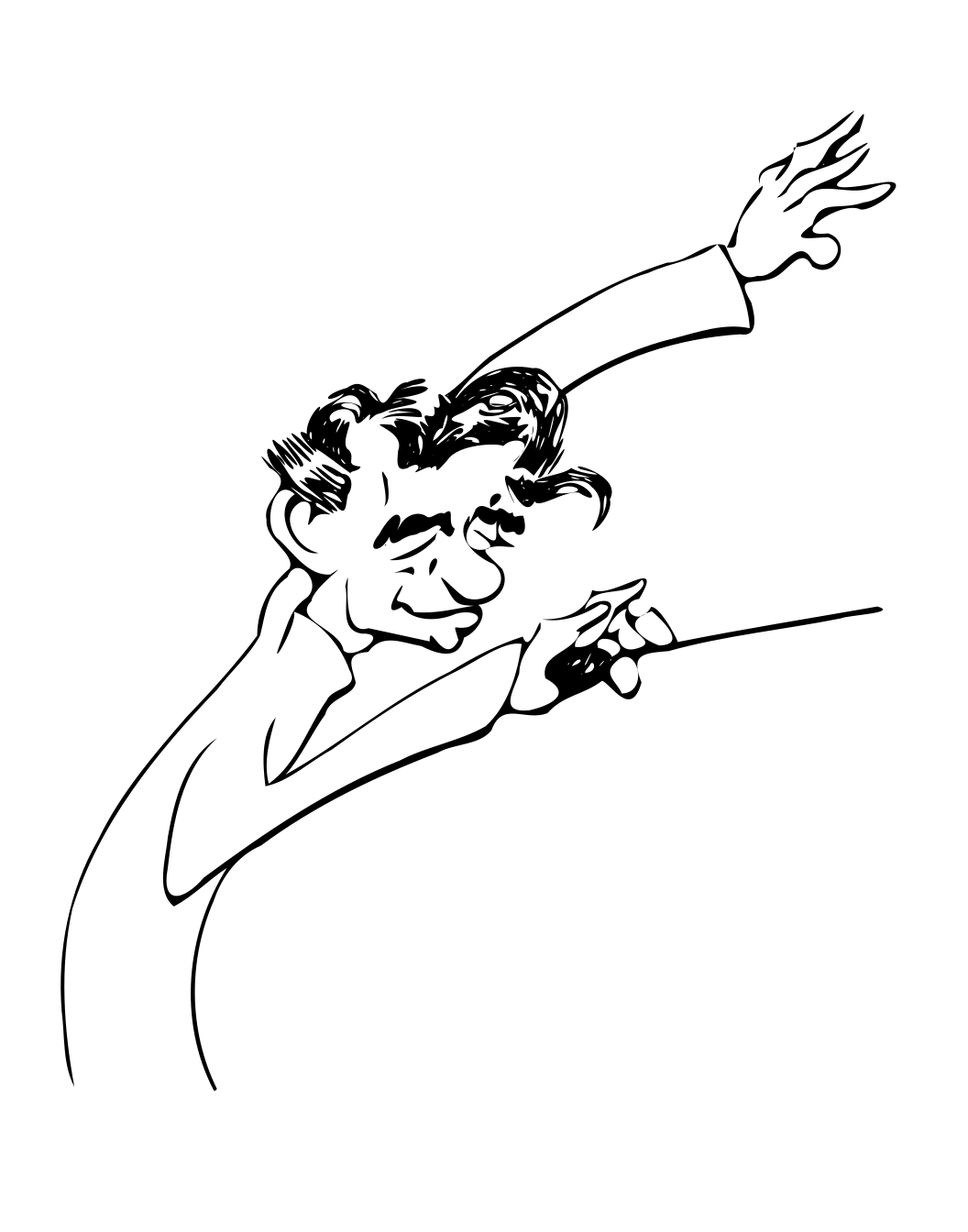
Lenny
There was a problem, though. Few people in America were fleeing their country to live in the Soviet Union in hopes of gaining a better life. But the residents of the Communists Countries were increasingly skedaddling to the West. One famous photograph was of a soldier in East Berlin leaping to freedom over a barbed wire barrier. In fact the Communist leaders were getting so concerned that the barbed wire was replaced by the (in)famous Berlin Wall. No one had any illusions that the wall was to keep West Berliners out of the East.
So the stories that there was a better life in the West became standard fare in the Soviet Union. America in particular was whispered about as a paradise where there was not just classical music and folk dancing like in Russia, but there were the new genres called jazz, blues, and - yes - rock and roll. Some young people began actually wishing they could live in the America where among other things they could buy durable blue jeans.
Such was the state of affairs when the Kirov Ballet was slated to tour Western Europe. But there was concern amongst the upper echelons. Rudi was still his rebellious willful self and his free-spirited attitude had come to the attention of the Soviet authorities. He seemed to have developed an overt enthusiasm for the mores and customs of non-Communist countries particularly in the freedom of personal choices and preferences. Before the company took off for Europe, the authorities decided Rudi needed some watching.
As far as Rudi himself, when he got to Paris he loved it. Rather than go back to his hotel after the performances, he would hit the nightclubs and cabarets. Not only did the manager of the troupe admonish him, but members of the Russian secret police, the KGB6, were following him around.
Footnote
In Russian, Комитет государственной безопасности or Komitet Gosudarstvennoj Bezopasnosti and it means the State Security Committee.
As the tour continued the ballet mangers became increasingly irritated with their party animal leading dancer. Rudi, though, felt they were treating him like an errant adolescent. So he ignored their advice and kept going out at night.
It was bad enough that Rudi was wandering out on his own and looking around Paris, but he was actually making friends! Worse, his newly found friends weren't in the proletariat class! Why, one was a young and wealthy heiress and socialite named Clara Saint!
"довольно! Dolvono!" On June 16, the troupe was scheduled to fly to London. But Rudi was handed a ticket for Moscow. He, the Ballet Bosses smiled, had been selected to perform at a gala performance in the Kremlin. Quite an honor, Rudi. Of course, they said, once he was done, he'd fly back and join them in London. Yes.
Rudi didn't believe a word of it. In fact, he figured that once back in the Bosom of Mother Russia for all he knew he would be stripped of his ballet post and shipped off somewhere to work in a factory. And that would be if he was lucky. So there was only one thing to do.
The earliest stories of what happened were reported that day. According to one account:
While the troupe was going through customs, Mr. Nureyev
was asked by two members of the troupe to return to Moscow. He refused and went to the airport bar with the two persons and the ballet master. Suddenly, Mr. Nureyev dashed toward police officers saying: "Protect me."
He was taken to the police office and signed a request for asylum in the presence of an official from the Soviet Embassy.
The Soviets followed the now accepted procedure of politicians everywhere and said the story was false even though it could be easily proven to be true.
Others of the troupe went on to London. There Feodor Feodorov, an official of the ballet company, denied the dancer had sought political asylum, and Valentin Bogdanov, administrative head of the troupe, denied anyone was missing.
Such белиберда didn't last long and more details emerged over the years. Probably the best account is the one that Rudi gave himself. At Le Bourget Airport a bunch of his Parisian friends had come to see him off, and he managed to tell them that he was being shipped back to Moscow. Everyone knew what that meant and the ballerinas in the company - even those who didn't like Rudi - broke into tears.
His new friend, Clara, showed up later than the others and Rudi may have even managed to phone her from the airport and tell her what was going on. While Rudi was in the bar with the ballet officials, Clara went to a couple of Agents de Sûreté Aeroportuaire and told him a young Russian wanted to stay in France. The officer politely said they could not simply take anyone into custody but he would have to approach them himself. Then Rudi made his dash, and despite the considerable choler of the ballet directors and the KGB agents, Rudi remained.
From the description it's not clear just how closely Rudi had being guarded. Likely the KGB agents were supposed to keep in the background and naively believed that Rudi wouldn't know he was being watched. But it's hard not to know what's going on if you look out a window or open a door and see some men in pressy suits scurrying away. How the KGB agents fared when they got back home, we don't know. Probably their bosses expressed their displeasure.
Certainly the Russian authorities expressed their displeasure about Rudi. He was tried in absentia and sentenced to prison. Fortunately there wasn't much the Soviet Goverment could do. Rudi himself didn't return to Russia for another 26 years when he was granted a 48 hour visa to visit his mother who was old and ailing.
For his part Rudi remained one of the most famous people in the World. He continued to perform as a dancer and in turn became a choreographer and conductor. One of his most famous collaborations was with the English ballerina Margot Fonteyn. When Rudi defected Margot was in her forties and thinking about retiring. But she agreed to appear with Rudi in Giselle in 1962. They were a hit and continued to perform in other ballets including Swan Lake.

Rudi and Margot
They were a hit.
(Click to zoom in and out)
Given Rudi's superb physical conditioning, it was a surprise when in 1993 people read that he had died at the early age of 54. Initial reports were that he died of a "cardiac complication, following a cruel illness".7 Now, of course, everyone knows that it was AIDS (acquired immunodeficiency syndrome) from HIV (human immunodeficiency virus). At the time, though, Rudi's lifestyle and preferences were still somewhat of a forbidden topic and infection with HIV was usually seen due to moral failings. When Rudi died prognosis of AIDS was poor, but today when there is still no actual cure, there are treatments which likely would have allowed Rudi to have lived a perfectly normal life.
Footnote
In death certificates the actual cause of death can be confusing and sometimes leads politicians and such people to say things like "Why Joe Blow didn't die of Whatchmacallit virus! He just died of pneumonia!"
What causes the confusion is that official causes of deaths are divided into separate categories, immediate causes and contributing causes. The immediate causes are in fact what produces the immediate cessation of life often within a few minutes of onset. The contributing causes are longer term and may extend back days to years.
The problem is that the actual cause of death in the real sense is often one of the longer term or contributing causes and the immediate causes really say nothing. For instance, one death certificate stated the decedent (the word in the form) died of "cardiac arrest" which simply means he died because his heart stopped beating. But the contributing cause was noted as "bronchogenic ca. lt. lung". That is "bronchogenic carcinoma, left lung". That means, of course, that Walt Disney died of lung cancer.
Rudi did not limit his artistic talents to music. In 1977 he starred in Valentino, a motion picture about the life of Rudolf Valentino. Naturally with Rudi in the film, there are dancing scenes. This does fit with the life of the Historical Rudolph (spelled with a "ph") who on his arrival in America found employment as a professional dancer. In general, though, the movie received mixed reviews, being panned and praised in near equal amounts.
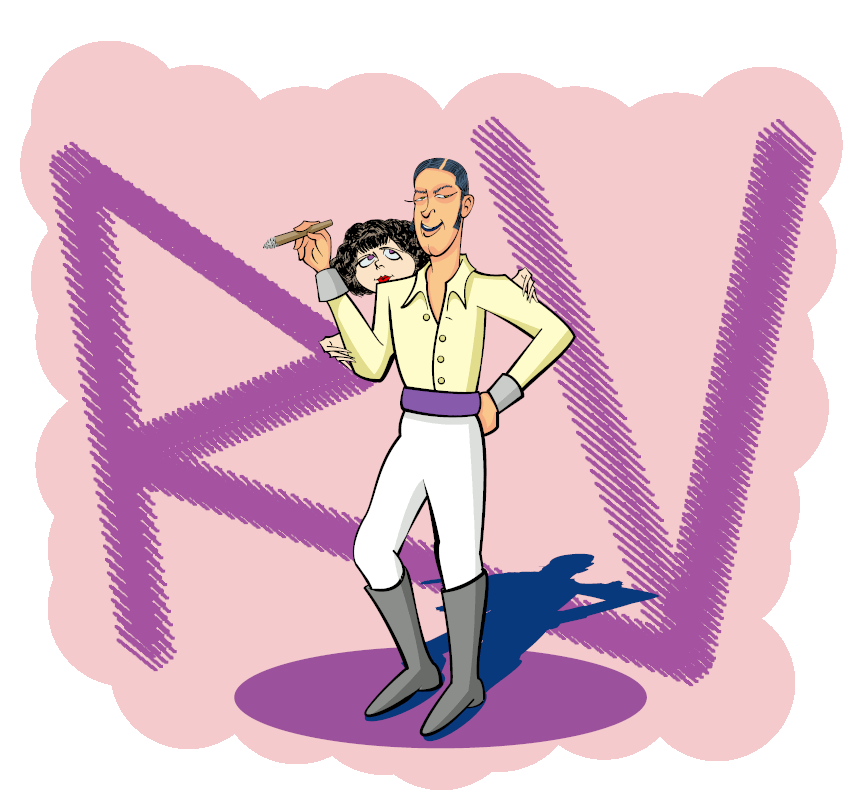
Rudi, though, was not the only famous Russian dancer to defect from the Soviet Union. In 1974, Mikhail Baryshnikov - then performing in Toronto with the Bolshoi Ballet - defected to Canada and later became a US citizen. His modus absconderandi varied a bit from that of Rudi. Mikhail left the theater after a performance and evading the ubiquitous KGB agents walked a few blocks where some Canadian and American friends picked him up. From there they took him to meet the government officials where Mikhail made a formal request for asylum. The reason for his defection, Mikhail said, were mainly artistic and any political motive had to be viewed from a distance. He wanted more creative freedom in his performances, he said, and he also wanted to perform more abroad.
Then later there was a bigger surprise. Mikhail was originally in the Kirov Ballet and as did Rudi he had also studied with Alexander Pushkin. But then in 1979, Alexander, like his two best students, also defected.
The Soviet Union lasted from 1917 to 1991. Despite the country's brief span, there was a certain amount of levity. Among the Russian shutki that occasionally raised a smile are:
| What's the difference between Communism and Capitalism? | Capitalism is man exploits man. In Communism it's the other way around. |
| Why were all books in the Soviet Union printed only in lower case letters? | They were against Capitalism. |
| Why was the man who was arrested outside the Kremlin for shouting "The Premiere is a fool! The Premiere is a fool!" sentenced to 25 years in a labor camp? | Five years for insulting a party official and 20 years for revealing a state secret. |
Of course, before the Soviet Union, there was the Tsar of all the Russias. So there we have:
| If the ruler of Russia is the Tsar and his wife is the Tsarina, what were their kids called? | Tsardines! |
| Did you know that in early Russia they had mobile optometrists but they aren't very good? | Sure, everyone has heard of Eye Van the Terrible. |
But as this essay is about Russian ballet, perhaps it's best to end up with a reminder of the famous Smothers Brothers routine. At first it was considered too daring to perform on American television and had actually been banned by an American network!
| Tommy: | Last night I went to see the ballet. |
| Dickie: | Bolshoi? |
| Tommy: | Oh, no. It was really very good. |
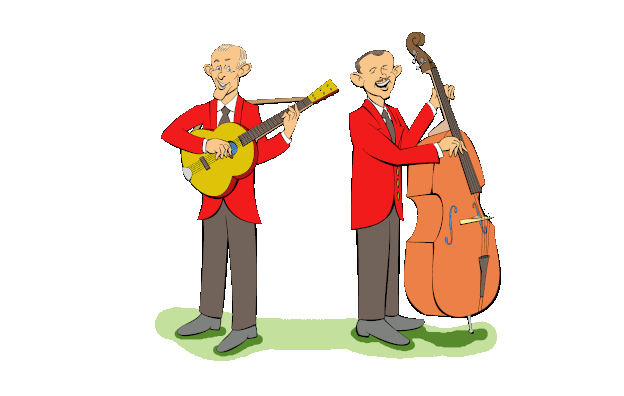
Dickie and Tommy
Bolshoi!
(Click to zoom in and out).
References and Further Reading
Rudolf Nureyev: The Life, Julie Kavanagh, Fig Tree Publishers, 2007.
Nureyev: His Spectacular Early Years - An Autobiography, Rudolf Nureyev, Alexander Bland (editor), Hodder and Stoughton Publishers, 1993.
"Rudolf Nureyev", Encyclopedia of World Biography.
"The True Story Behind the Rudolf Nureyev Movie The White Crow," Madeline Roache, Time, April 26, 2019.
"Russian Dancer Defects in Paris, Asking Asylum", [Washington, D. C.], Evening Star, June 16, 1961, p. 4.
"Dancer Gets 48-Hour Visa to See His Mother: Nureyev to Visit Russia After 26 Years", Los Angeles Times, November 13, 1987.
"Mikhail Baryshnikov On Leaving Everything Behind", Javier C. Hernández, The New York Times, June 28, 2024.