"Star of the show is Joe E. Lewis, a great Copa favorite, who did not do as well as usual (possibly because he was doubling from Loew's State). His mock seriousness, his tongue-in-cheek delivery of silly songs and his very funny asides drew a lot of laughs. But we've seen him funnier."
"Up to the point of Joe E. Lewis's riotous half-hour, current bill was very unexciting. Even Lewis, during his emcee chores, was somewhat incoherent in the intros, and his gags were not of top Lewis caliber."
From the 1920's well through the 1940's Joe E. Lewis was one of America's top performers. As to why Joe has been largely forgotten today compared with others of his vintage - Charlie Chaplin, Louis Armstrong, Josephine Baker, Duke Ellington, Rudolph Valentino, or Al Jolson - that was largely due to the particular venues that Joe selected for his shows.
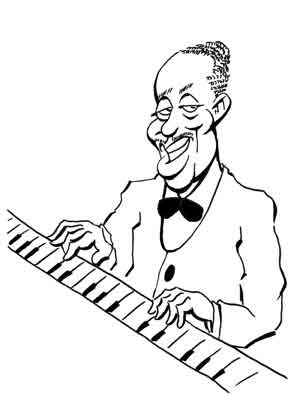
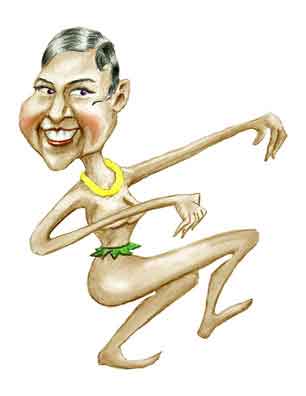
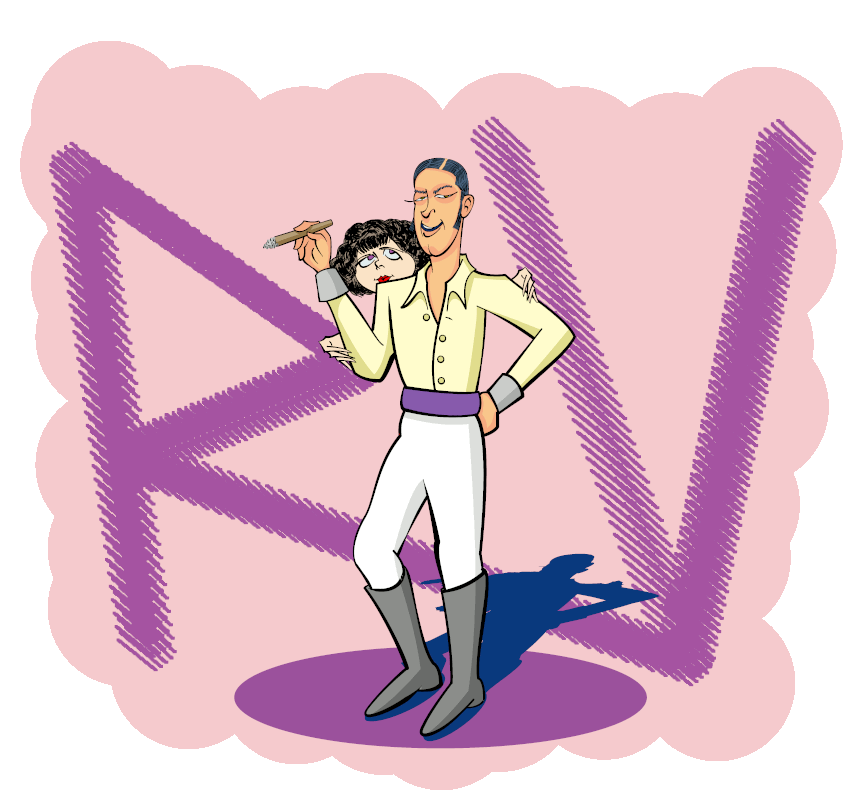
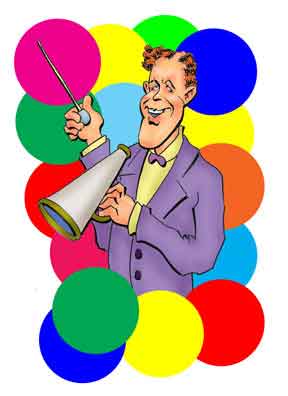

Before radio and movies emerged in the early 1920's, all performances had to be live. But even after the Electronic Age began to dominate American entertainment, Joe stuck with live appearances. Other big-name celebrities from the first decades of the 20th Century, although they did not eschew in-person performing, largely moved into cinema, radio, and later to television.
Of course, Joe E. Lewis's name was NOT Joe E. Lewis. It was Joseph Klewan.
And if you thought the name Wehba was rare - which dropped from a name held by 104 people in 2010 to less than 100 in 2020 - sources state that today there are only 10 to 50 Klewans WORLDWIDE (and even those numbers are just a guess). In fact, the name is so rare that its origins and etymology have been long obscured.1 But yes, there are current residents of the United States named Klewan.
Footnote
LIKELY, though, the name is a shortening of Klewansky which is of Eastern European origin.
Joe's parents were Jewish immigrants and they settled in New York. Joe was born on January 12, 1902, exactly half a century before an event that would change the world forevermore. Being born in the continental United States, Joe was a native-born citizen with all the rights and privileges thereof.
So far there has been no scholarly academic biography written about Joe but there is a biography. And from what has been written we know that he grew up in New York and as a kid he loved to entertain and amuse his friends. Joe would enter local talent shows and contests and if there was a stage he would climb on. But unfortuntely his progress was slow and after much effort Joe ended up winning a total of two contests which garnered him a medal and $2.
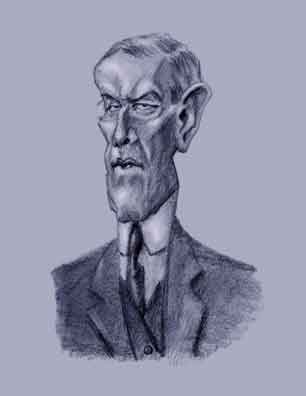
Joe completed two years of high school which actually put him into the upper echelons of the educated.2 But there was of course a war on - World War I, that is. Although Woodrow Wilson had campaigned on a promise to keep America out of what people called "The European War", when the United States finally joined in on April 6, 1917, many young men rushed to join up.
Footnote
In 1920, only 20% of the US population went beyond the 8th Grade. At that time grammar school was usually Grades 1-8 and high school was Grades 9-12.
Joe enlisted in the Marines - the "Devil Dogs". But to do so he had to fudge three years to his age. His subterfuge was quickly found out by his older sister Henrietta who spilled the beans. As an alternative the next year and at the venerable age of 16 Joe joined the Merchant Marines. This stint lasted only a few months and ended with the Armistice.
Rather than return to school Joe was determined to go professional. But when Henrietta - who seems to have been not only quite a snoop but a tattletale - learned that he had gone to Hoboken to audition for what some scholars have discourteously called a "third-rate burlesque show", she again blabbed to her parents. Joe's mom would have none of it and Joe felt that to pursue his ambitions it was best to strike out on his own.
But Joe did have to eat and his big brother Al was running a men's clothing store - a haberdashery as they called it - in Easton, Pennsylvania. So while Joe was pursuing his professional ambitions, Al said he could come work with him. Somewhat surprisingly Joe found that the nightlife in the Lehigh Valley was amenable to an aspiring entertainer. Easton wasn't all that far from New York and environs, and Joe began to venture away from Pennsylvania to New York and down to New Jersey. Any place with a nightclub that would let an aspiring singer and comedian get up and perform would do.
Unfortunately nothing seemed to pan out. Joe wandered around the region but the market for singers and comedians, it seems, was fully subscribed. Finally out of work and on his uppers, on January 15, 1918, Joe stumbled into the Columbia Beer Garden in Atlantic City. He begged for a free beer, and after some discussion, the bartender asked the bandleader to let Joe sing a song to pay for the beverage. Joe got up on the stage and sang "Maculsha", a rather syrupy Irish ballad made famous by John McCormick.
And the audience loved it. They asked for some more songs and Joe obliged. Clearly Joe had the wherewithal.
Of course, singing some songs in a nightclub does not a celebrity make. Complicating matters was that two days after Joe performed at the Columbia Beer Garden, Prohibition kicked in. But contrary to popular opinion, it remained perfectly legal to buy and drink alcoholic beverages. What WAS illegal was to manufacture, transport, or sell booze. So although the law-abiding rich had stocked up their wine cellars and liquor cabinets, the middle and lower classes had to find alternative modi boozerbiberaandi.
One way, of course, was to brew your own. Although strictly speaking this was illegal - it was "manufacturing" - the Federal Government had stated that they would take a hands-off policy for people who made beer or wine in their own homes for their own private use. But making beer and wine is a long and tedious process and most people preferred to go to establishments that would serve ready-made albeit surreptitious snorts.
Which included nightclubs. Of course, officially you went to a nightclub for the entertainment. Some clubs had dance floors for the patrons, but others specialized in having singers and comedians perform on stage. In most clubs the only refreshment offered to the customers was the drinks and such establishments were often called cabarets. This sounded more elegant than speakeasies, the name that has come down to us.
But wait! If it was illegal to "manufacture, transport, or SELL" alcoholic beverages, how was this possible for these clubs to remain open?
Well, the direct way was to simply serve the drinks and hope the cops would leave you alone. But one theoretical way to avoid breaking the law would be to simply ask for a "cover charge" - that is, a fee for admittance. Then a certain number of drinks could be provided for free. That way the clubs could claim they weren't selling alcoholic beverages. All they were doing was BUYING the booze from their supplier.
Of course such a ruse wouldn't have fooled anybody. Besides the National Prohibition Act of 1919 - called the Volsted Act - added some additional details for implementing the 18th Amendment. So although it wasn't illegal to purchase alcoholic beverages, the Volsted Act did state that any commercial establishment that sold or BOUGHT alcoholic drinks could be declared a "public nuisance". And if you ran a public nuisance you could be shut down and arrested.
But police raids had little effect on furthering the ideals of Prohibition. If they shut down a club, it would spring up again, perhaps even at the same location and within a few hours. So there remained a real demand for performers to keep the drinkers entertained. And with high demand came high supply.
Of course, a major hurdle for the aspiring entertainer was simply getting hired. For those trying to break into show business the usual modus was to simply go to a club and ask to meet the manager. You then told him that you wanted to be an entertainer. At that point he usually told you to beat it. But sometimes the manager would ask you to show him what you could do. If he liked it, he'd give you a trial run, maybe a for week and probably for little or no pay.
Joe began making some progress although it was a life - as someone once wrote - of dearth or foison. He might get hired at the then munificent wage of $75 a week, but then he would go for long spells with no work at all. So as the Twenties began to roar, Joe was barely squeaking by.
Joe was discouraged and he was wondering if he should return to working at his brother's haberdashery shop. But then came a stroke of luck. Joe met John Stuart Black.
John Stuart Black was a celebrity who has literally fallen off the historical radar screen. Even the basic reference works of popular culture don't mention him. But in 1920 he was one of the biggest entertainers around.
Johnny's claim to fame was that in 1919 he wrote the hit song "Dardanella". The song sold over a million copies in sheet music and over 6 million in records. With the success of "Dardanella", Johnny's name itself was enough to get him bookings. The song has been recorded by others and you will read on a popular informational website that one of the later "cover versions" was sung by Bing Crosby teaming up with Louis Armstrong. However, Johnny's and Bing's Dardanella wasn't the same song.3
Footnote
Although lyrics of songs can be copyrighted, titles cannot. So Bing's song and Johnny's each had their own copyright registration.
One increasingly popular trick used by some bands is to pick their name to be the same as a famous song. So you have groups named "Deep Purple", "A Day in the Life", "Death Cab for Cutie", "Hound Dog", "Riders in the Sky", and "Fiddlers' Green". So if you try to look up the song, you'll end up getting directed to the band.
Johnny always worked with a partner who was usually a young and aspiring performer who he could hire for virtually nothing. Johnny would play the piano - he was a multi-instrumentalist - and his partner would sing and provide the patter. These partnerships were inevitably short lived largely because Johnny did in fact pay his partners virtually nothing.
No one is perfect, of course, even one-hit wonders. One of Johnny's faults - in addition to being rather tight-fisted - was he liked to knock back a few. Actually more than a few and it wasn't unusual for him to show up at the club barely able to sit at the piano. This tendency often produced frequent job cancellations, but then his name could always land him a spot in another club.
Johnny's fame also ensured he could usually find replacements. He had seen Joe's act and when his then current partner abruptly quit, Johnny asked Joe to join him at $100 a week. Joe didn't need to be asked twice although he found the $100 payment was often deferred.
Joe quickly found his duties mandated more than just singing and that it fell on his shoulders to make sure Johnny was in a condition where he could play a coherent tune. Joe also found himself having to hustle Johnny away from various irate young men whose wives or girlfriends had caught Johnny's attention. The difficulties became frequent enough that it seemed prudent for Johnny and Joe to leave the East and relocate to Chicago where one of Johnny's old friends ran the club Chez Pierre.
Unfortunately working in a new town did not improve Johnny's reliability. Never knowing if Johnny would be in any condition to go on, finally Joe put down an ultimatum. If Johnny showed up plastered at a job one more time, then Joe was leaving the act. Of course, Johnny did and so did Joe.
Fortunately by now Joe was well-known and he quickly established himself as a solo performer. He was primarily a comedian and his jokes tended to be on the suggestive side which he interspersed with songs of winkable lyrics. The clubs' owners found that Joe's humor and patter made him a perfect host where he would spend a few minutes on stage between the acts.
Joe was now performing at the best clubs and cabarets in Chicago and when he appeared at the Midnight Frolics on Twenty-Second and Wabash, he was a hit. In between shows he would hang out a short distance off at the Four Deuces Club, a popular nightspot owned by Vincenzo Colosimo.
Like many immigrants Vincenzo had adopted an American name and everyone called him "Big Jim". One of Big Jim's parters was a mild-mannered and grandfatherly figure named John Donato Torrio. Johnny himself had a young associate, a used furniture dealer named Albert Brown. But "Brown" was a business name and "Albert" was a bit of an Americanization for the real name of Alfonse - Alphonse Gabriel Capone, that is.
Al had heard about Joe's act. So when he saw Joe sitting at the Four Deuces he walked up and introduced himself.
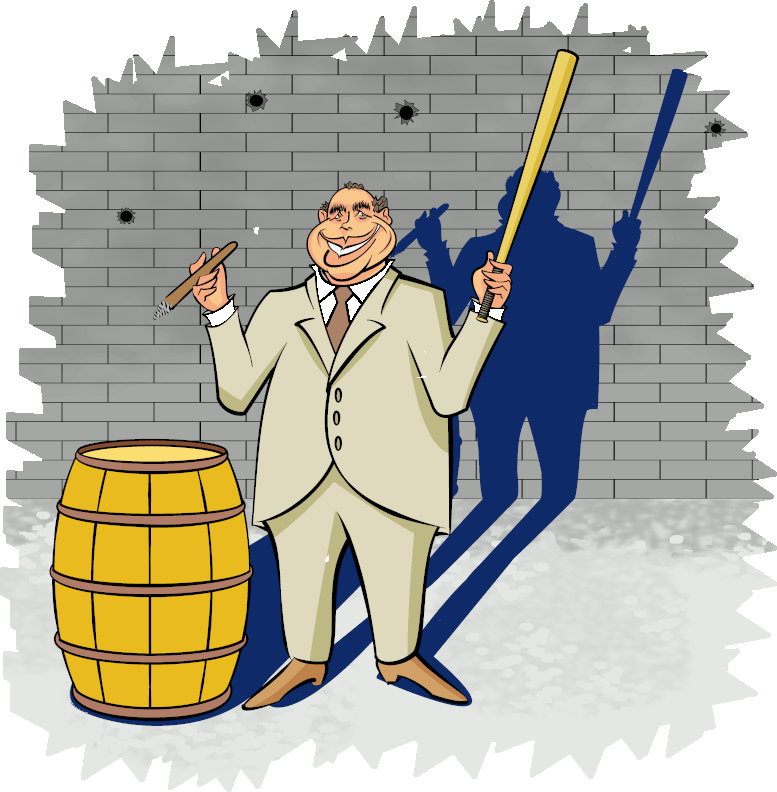
"I hear you have a good act," Al said. "Save me a table tomorrow night." Soon Al became one of Joe's biggest fans.
By the mid-1920's Joe had become both the headliner and emcee at the New Green Mill Cafe on North Broadway. The club - which is still extant at a slightly different location and name - saw increasing success. And much of the rising popularity was because people came in to see Joe.
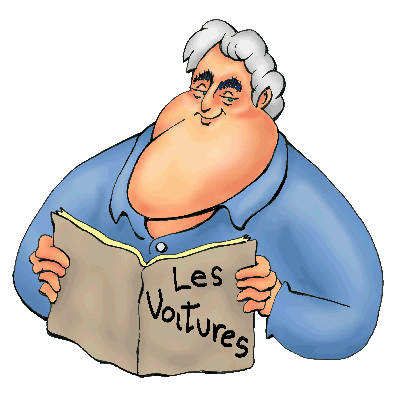
Jay Leno
He played the clubs.
One complicating matter (obviously) was that most nightclubs of the time were (allegedly) owned by the group of entrepreneurs collectively and rather discourteously called The Mob. Nightclubs (allegedly) served as convenient meeting places and were also good fronts to (allegedly) funnel illegal monies from the rackets. Such a business model (allegedly) continued well into the 1980's and Jay Leno told some amusing stories - at least in hindsight they were amusing - about times he was appearing in (allegedly) mob controlled clubs.

Jack McGurn (and Friend)
(Click to zoom in and out.)
One of the (alleged) owners of the Green Mill was a gentleman who along with his wife Louise played tournament level golf. That was Vincent Gebardi who for some reason preferred the name Jack McGurn. Others, though, with not complete accuracy referred to him as "Machine Gun" Jack McGurn.
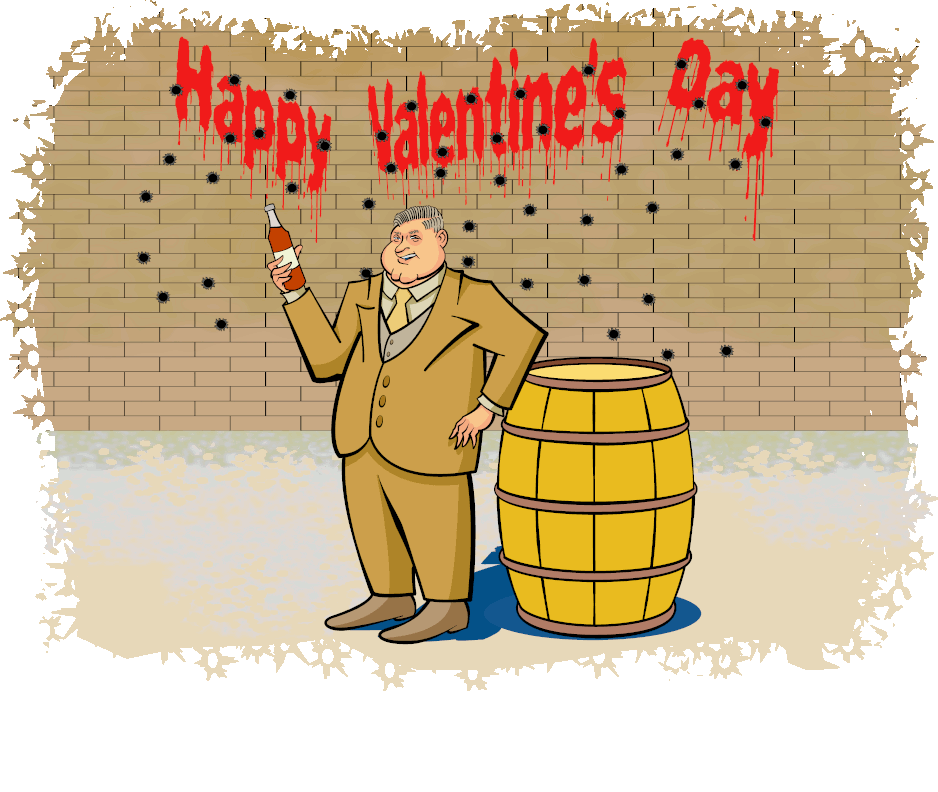
Like many businessmen Jack had other irons in the fire. In later years Jack - in addition to representing Illinois's Evergreen Golf and Country Club in the 1933 Western Open - worked with Al Capone - sorry, that's Al BROWN - in (allegedly) planning a company reorganization known as the St. Valentine's Day Massacre. But Jack's work with Al remained pretty much freelance and it seems he had some interest in making the Green Mill a success independent of his work with Al.
With Joe as the host, the Green Mill had become one of the hottest of Chicago's hot spots. Joe himself was taking in about $600 a week - GREAT money in the Roaring Twenties. But as this was the Land of Free Enterprise, Joe entertained other offers.
So Jack was not pleased when Joe came up and said he was leaving. He was moving to the New Rendezvous Club. There would a new audience and new opportunities - and a new $1000 weekly paycheck.
It was bad enough that Joe was leaving Jack's club but the New Rendezvous was in another territory - another GANG'S territory, that is. The "other gang" was the notorious Irish-Polish North Side Gang run by Adelard Leo Cunin who preferred the less literary sounding name of George "Bugs" Moran. George had taken over the North Side in 1924 after the - ah - "retirement" - of the previous boss, Dean O'Banion. In addition to establishing the New Rendezvous as competition for Jack, George had a habit of moving his other activities - like hijacking booze shipments - into other neighborhoods and had even branched down into Al's South Side Territory.
But as far as Joe leaving the Green Mill, Jack voiced his displeasure. But not in any manner that Joe thought was threatening. At worst Jack seemed disappointed. Later whenever the two men would meet, Jack kept cajoling that Joe should stick with the Green Mill. If it hadn't been for his time at the Green Mill, Joe would never have become famous. And now, without Joe as host, the Green Mill was actually losing customers! It was time for Joe to come back.
"Not a chance," Joe said.
In the wee hours of November 9, 1927, Joe wound up his act at the New Rendezvous and gone back to his hotel. He took his pay out of his pocket - it was usually in hundred dollar bills - and then he got into his pajamas. Dawn was breaking when he climbed into bed and went to sleep.
Then the phone rang and a sleepy-eyed Joe answered it.
A voice - heavily accented - said, "Don't open the door - for nobody."
Perhaps Joe was thinking in terms of formal logic. Two negatives cancel out and if it's true you don't open the door for nobody, then in follows that you must open it for somebody.4 So when at 10:30 a. m. there was a knock Joe immediately opened the door.
Footnote
Expressing normal language in formal logic can be a bit tricky. About the best you can write for "I don't open the door for nobody" is ¬∀x: ¬O("I", x), "It is false that for every x, I will not open the door for x". With standard logical transformation, this can be shown to be equivalent to ∃x: O("I", x) or "For some value of x, I will open the door for x." So to avoid confusion, it's always best to use good grammar.
Without being invited three men barged in and one had a .38 pointing right at Joe's chest. Immediately Joe expected the worse. But instead of the worst the other two men went behind him and if what happened wasn't the worse, it came pretty close.
When Joe regained consciousness, he was lying in a huge pool of blood with twelve knife wounds on his face and neck. Although he was almost paralyzed he did make it to the phone. When the operator asked for the number he tried to croak out a request for help. But he couldn't speak.
When the operator hung up, Joe realized he had to get out of the room. At least in the hall where he might find someone who could help. Painfully he crawled to the door and once in the hall he even managed to stand.
One of the hotel maids came by making her rounds. But instead of going for help, she took one look at Joe and fainted.
Joe staggered on to the elevator. It was one of those new-fangled self-operating ones and he rode down to the lobby. Although at first the manager thought Joe was just playing a joke on everyone, ultimately he saw Joe wasn't fooling and called the police.
By the time the officers arrived, Joe was unconscious and they thought he was dead. But when they saw he was still breathing, they put him in the patrol car and took him to the nearest hospital. The doctors had little hope but they hurried Joe in for emergency surgery.
And amazingly Joe lived. Even more amazingly within two months of the attack he performed at the New Rendezvous Club. Joe, though, thought the enthusiastic response was simply out of sympathy (which it may have been) and he thought he was through (which he wasn't). Although it took several years of rehabilitation, by the later 1930's Joe's name began to appear regularly in the newspapers as one of the nation's top comedians. By then, though, Al was in the slammer and Jack had ended up on the floor of a Chicago bowling alley.
But what about the - well, we'll call them "operatives"? What happened to them?
One word of caution. Many of the details of the various mob events - who was present and who did what - are unknown. True crime accounts may in fact be true, but they are also based on testimony of people who, well, who may not be the most reliable of informants. So if you read that so-and-so was at the "hit" of such-and-such, it may or may not be correct.
Contemporary accounts don't mention who had come knocking at Joe's door. In fact, if Joe himself knew them, he never mentioned their names. The usual and obvious story is that Jack McGurn sent his "boys" around to take care of Joe for his disloyalty. But there are problems with this interpretation. For one thing it made no sense for Jack to get rid of the very person he was trying to get back to his club. It's also not clear exactly how much of a stake Jack actually had in the Green Mill. Another hypothesis is that the attack had nothing to do with Jack. Instead some have suggested that Joe - who was quite the ladies' man - had been too familiar with the distaff companions of other gentlemen.
But whatever the motives of the three men, students of history have wondered just who it was who barged in Joe's room so discourteously. Some knowledgeable scholars have stated that Joe did indeed know who they were. Joe, of course, had powerful friends, and by some accounts within a few months all three of Joe's assailants had met untimely ends.
But even this story - that the attackers reaped their rewards - is contradicted by later testimony and by one one of the purported attackers himself. A friend of Salvatore "Sam" Giancana, the (alleged) mob boss who among other things liked to cook sausage and peppers, claimed that Sam told him that he and a man named Leonard "Needles" Gianola along with another unnamed individual were the miscreants. Sam's second-hand account, though, wasn't printed until 1992 which was 15 years after Sam himself met his own and rather inglorious end.
After Joe's recovery, he continued to perform and despite reports to the contrary he was able to sing. As before he preferred working in the clubs and although he appeared on radio it's hard to find recordings of the old performances. One show that claimed Joe was a guest didn't even feature him. And although Joe's most active years were during the Golden Age of Hollywood, he was only in three feature films before 1942 and none in a starring role.
By now there was another war on - World War II, that is. Joe's preference for live performances made him a perfect fit with the acts sponsored by the United Service Organizations (USO). He performed for the troops mostly in the Pacific Theater where his brand of humor - and knowing that most of what he said wasn't going to be recorded - made him a hit with the troops. After the War, Joe returned stateside.
But the times - as a Nobel Prize Winner would write - were a-changing. Although motion pictures remained popular after the war, radio as the #1 home entertainment was fading. Like it or loathe it, a new phenomenon arose that could not be ignored.
And yes, Joe did appear on television although not that extensively. From 1951 to 1957 he averaged about one appearance a year on the Ed Sullivan's Show. However, his bibulous monologues did not really register with the younger crowd and when he appeared as the Mystery Guest on What's My Line, the young viewers wondered just who this guy was.
Footnote
Another favorite show of Joe's was The Mike Douglas Show where Joe made 14 appearances.
The older folks, though, knew Joe. In 1955 a sportswriter named Art Cohn published Joe's biography as The Joker is Wild. The book, began in media res and the whole book is structured around the attack by the never named assailants. In fact most tellings of Joe's life make the attack the biggest part of the story. Whether it was intentional or not, Art, who in addition to covering sports had over ten screenplays to his credit, had crafted a book that was well adaptable for the big screen.
And so it happened. In the course of his career Joe had made the acquaintance of a skinny young man who had sung with Tommy Dorsey's band. Originally a crooner, Francis Albert Sinatra had moved away from being the toast of the Bobby Soxers to finding new fame as a serious Academy Award Winning actor. By the mid-50's Frank was one of the biggest Hollywood stars.
Frank was also an astute businessman and he bought the rights to Art's book. Frank played Joe, of course, and his love interests were Martha, played by Mitzi Gaynor, and Letty, played by Jeanne Crain. The plot played up Joe's drinking and the problems it caused with his personal and professional life.
We don't really know what Joe really thought of the picture although he did joke about it. Once he told an audience, "Sinatra did my life story, ladies and gentlemen, in a picture called The Joker Is Wild. And those of you who saw the picture, it wasn't my true story. Paramount couldn't get a liquor license." As far as having ladies like Mitzi and Jeanne starring in the film Joe added, "Sometimes I think Sinatra had more fun playing my life than I had living it."
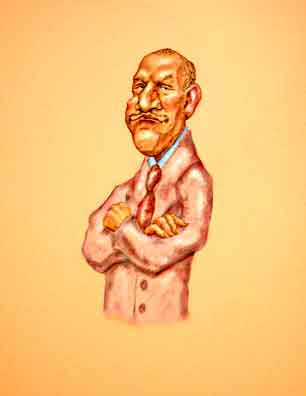
Joe returned to New York as a headliner at the famed Copacabana nightclub. By now comedy records had become quite popular, particularly the so-called "party records" where the humor was considered inappropriate for all ages. But compared to the party-record maestro Redd Foxx whose total output was over 50 albums, Joe's oeuvre was light and his only album was in 1961 with It Is Now Post Time.
Like many party records this was from a live performance, in this case from Las Vegas. The recording gives us one of the few examples of Joe's routine which was not toned down. But like much humor from past times, Joe's topics may not resonate with the modern listener with the zingers - often quite barbed - about past public figures and celebrities.
Nixon looked like a guy who's gonna sell a used car and Kennedy looked like the guy who owned the lot.
I'm just crazy about this Bobby Darin. He sings from the heart which is highly necessary when you haven't got a voice.
Before singers come out as a rule they spray their throats. Not Bobby. He sprays his fingers.
I've been on television shows. I've been on for Ed Sullivan. I like to work for Ed because he has a great personality. He can light up a whole room just by leaving it.
I think Sophie Tucker is the Judy Garland of the Stone Age.