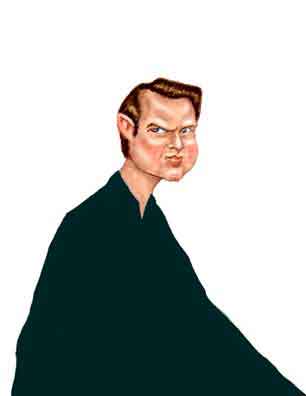
Richard Berry
(Click on the image to zoom in.)
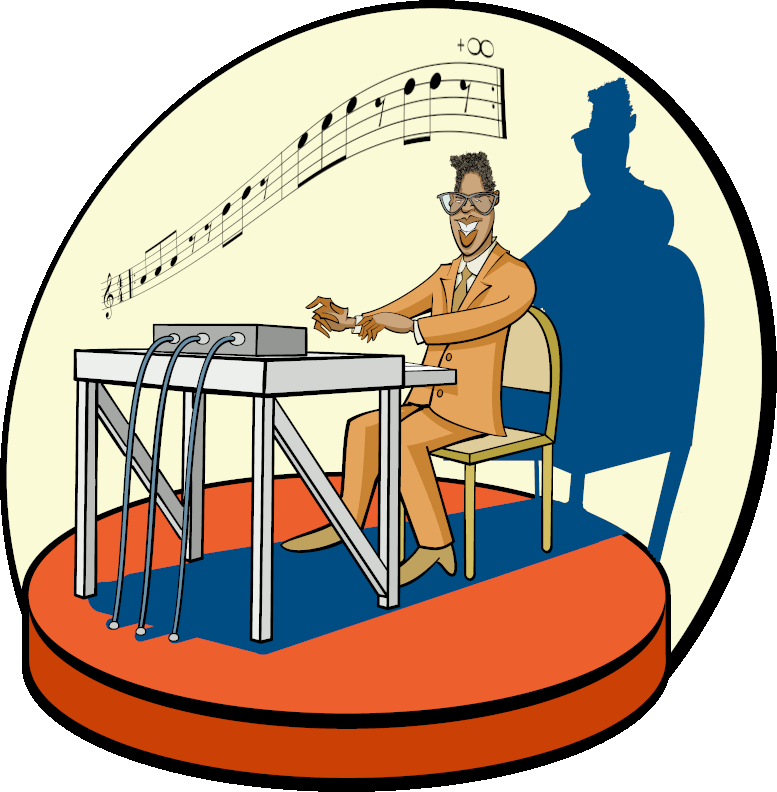
What did singer and songwriter Richard Berry have in common with [and to skip this rather lengthy list click here]
 David Kuncicky, The Fabulous Blue Jays, Julie London, The Green Door Kids, Charlie and the Tunas, Johnny Winter, Honey Ltd., Ripple Blast Singers, Pete Fountain, Grandma's Rockers, The Hitmen, Joske Harry's and The King Creoles, R. Stevie Moore, The Angels, The Pink Chunk, Rosebuds, Barry Allen, Eddie and the Subtitles, Saragossa Band, Motörhead, Dynamite Platoon, Tuck Andress, Two Bands and a Legend, The Limiñanas, The Standells, The Alarm Clocks, Ike and Tina Turner, The University of Washington Husky Marching Band, The Roosters, Sounds Orchestral, The Messengers, Tiger Moon, The Iguanas, The Crescent Street Stompers, Swamp Rats, John Kelly Mirando, Captain Cardiac and The Coronaries, Little Bill with the Adventurers, The Athenians, Stanley Clarke/George Duke, Afterglow, Maureen Tucker, Red Sky Coven, All-Niters, The Shadows of Knight, The Bloodclots, Mazeffect, The Ventures, Lyres, Goddo, The Nomads, Chihuahua and Friends, The Falcons, The Destructors, The Rice University Marching Owl Band, Kenny Harpers, Kolossale Jugend, John O'Hara and His New Playboys, Robert Plant, The Basement Wall, Flamin' Groovies, Walter Grootaers, Fat Boys, The Meows, The Silence, The Beau Brummels, Michael Allen Harrison, Greezy Wheels, The Flippers, James Williamson and The Careless Hearts, The Marsadees, The Gurus, Iggy Pop, Iggy and The Stooges, Simba, John Belushi, Fuzztones, The Last, Ian Whitcomb, Shellie Morris and Ross Wilson, Deniz Tek, The American Foxes, Toots and the Maytals, Ace Cannon, The Kinks, The Navahodads, Billy Bob and the Belaires, Eight n' Up, Spectrum Plays the Blues, Thee Headcoats, John the Postman's Puerile, The Feelies, The World of Silly Girls, Mario Allison Y Su Combo, The Studio Sound Ensemble, Bobby Lee, The Ad-Libs, Tony Lane and The Fabulous Spades, The Pyramids, Tino and The Revlons, Vitamin Wig C, Heavy Cruiser, Barry White, The Purple Helmets, Guru Josh, The Surfaris, The Lat-Teens, The Mystic Eyes, Luxury Liner, Joan Jett and The Blackhearts, Australian Crawl, Ritchie Venus and The Blue Beetles, The Really Eclectic String Quartet, The Beach Boys, The Flamin' Sideburns, The Dallas Four, The Kids, The Treble Spankers, The Fall, Babilon Boys, Tom Petty and The Heartbreakers, The Wailers, Pow woW, Paul Shaffer, The Oregon Marching Band, Young and Restless, Michael Doucet and Cajun Brew, Andrew Crayford, Smashing Pumpkins, The Outcasts, Das Original Oberkreuzberger Nasenflötenorchester, Jim Valley with Don and The Goodtimes, Demi Moore, Pinker Tone, Box Office Poison, Rockin' Robin Roberts, George Gallacher with The Store Keys, Angel Corpus Christi, The Beatniks, The Mellowdramatics, Al Copley, The Three Amigos, The Cat and Owl, Jan and Dean, Travis Wammack, Eddie Cano and His Quintet, The Sonics, Henry Freis and The City Leaders, The Troggs, Roberto El Gato, NeighboRhood Childr'N, Los Imposibles, I. Kadez, Tyme Code with Steve Sparling, Steve Plunkett, Jim Capaldi, The Sandpipers, Black Flag, Angry Samoans, The Mothers of Invention, Jr. Cadillac, Les Dantz and His Orchestra, Hermanos Guzanos, Otis Redding, Jack Ely and The Courtmen, and Paul Revere and The Raiders? [To return to the top of the list click here.]
Well, as true Cognoscenti of Culture know, everyone here made recordings of the most quintessential of quintessential rock and roll songs. That was "Louie Louie", and by one estimate this talley omits perhaps 900 other artists.
But it was Richard who actually wrote the song and in 1957 he released the first recording with his group The Pharaohs. The song didn't chart nationally and a couple of years later Richard sold the rights to a publisher for $750. At that time selling songs outright was a common practice for songwriters and actually Richard's price was quite substantial when there were some songwriters who were selling their wares for as little as $25 a pop.
The story of the song's rise from obscurity to iconicity is now well known but a brief rehearsal will not be amiss. In 1962 a rock and roll band from Portland, Oregon, named the Kingsmen - some members who were still in high school - went to a recording studio and cut a single of Richard's "Louie Louie". The song was issued the next year by Jerden Records with the all-instrumental "Haunted Castle" on the flip side. The record sold poorly and it was selected by Boston disc jockey Arnie "Woo Woo" Ginsberg as the Worst Record of the Week. Jerden dropped the title and the record was immediately picked up by Wand Records.
Two things then happened. First the song began to get more air time. Next, teenagers loved what everyone has to admit is an exuberant performance. The song began to sell and broke into the Billboard's Top 100 Chart at #83 on November 9, 1963. By January 11, 1964, it had peaked at #2 where it stayed for 3 weeks.
But because no one could understand the muddled lyrics, almost immediately people began to murmur that the words were not in keeping with Traditional American Family Values. The song quickly became an example of what is known as 1) a "moral panic" and 2) an example of why kids justifiably think adults have no clue about what's going on.


Exacerbating the Panic of All Good Citizens was that shortly after "Louie Louie" hit the airwaves a quartet of Young Englishmen with unusual hair styles appeared on Ed Sullivan's Really Big Shew. Ed's program drew the largest viewing audience in the nation and parents seeing their daughters go into frenzies at the sight of the Fab Four convinced them that all things enjoyed by young people had to be bad. And that included a hit tune with incomprehensible lyrics.
The reasons for the lack of verbal clarity has been given variously as 1) lead singer Jack Ely was wearing braces, 2) the microphone was misplaced, and 3) the recording studio was designed for voice-over work rather than recording music. Of course, none of the reasons are mutually exclusive. Jack also said to make the recording simulate a live performance, the band set up in a circle with the microphone placed high above the band. Jack stood in the center and had to tilt his head back to shout toward the mic.
It wasn't just the widespread paranoia of the 1960's era adults that started the rumor that the barely recognizable English were "dirty words", particularly when the song kept being played even after it dropped from the charts. The kids did indeed buy the record and play it at slower speeds to find what the words "really" were.1
Footnote
Jack first heard the song in the version, not by Richard Berry, but from the recording of Lawrence Fewell who used the stage name Rockin' Robin Roberts who sang with the group The Wailers. Robin's song starts off with a rather honking saxophone but continues with lyrics far more comprehensible.
Almost simultaneously with the Kingsmen's release, Paul Revere and the Raiders - who at that time performed in Colonial Era garb - released their version. Their lyrics are - if possible - even more incomprehensible than Jack's.
The problem, though, with playing the 45 single at 33⅓ rpm is that the difficulty in comprehension isn't that the words are spoken too quickly. They're just garbled. A slowed-down garbled word is still a garbled word.
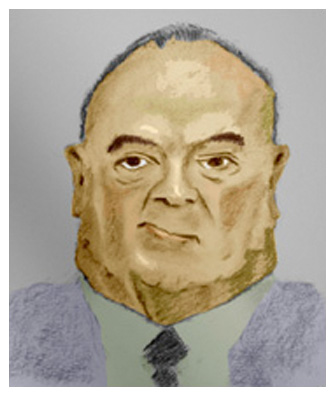
Complaints about the playing of the song on the radio 1) only added to its popularity and 2) reached J. Edgar Hoover, then head of the Federal Bureau of Investigation. Ultimately the Bureau launched an investigation and after two years concluded the words were incomprehensible at any speed.
The question immediately arises why was there such a brou-ha-ha when the lyrics became part of the public record once the song was copyrighted. Of course, today people raised in the Digital Era don't realize how difficult it was to find lyrics of popular songs before the early 1990's. Books with popular songs were a rarae aves in terris particularly in Quaint Small American Towns where the only books available were trade paperbacks displayed in the wire racks in drug stores and supermarkets. Song books with lyrics of a specific song were simply not to be found.
So kids had to get the lyrics from listening to the songs. But when words are sung - whether opera or rock and in English or something else - they still often come out garbled. So kids would spend hours of repeated listening to their favorite songs with pencil in hand trying to figure out the words. Today, of course, a quick search can show us that the original lyrics written by Richard Berry are perfectly innocuous. But that wasn't the case in the 1960's.
But even if Richard's lyrics could be found that left the question. What were the Kingsmen actually singing? Was it possible that on the recording they sang perfectly innocent words but in some performance they catered to the expectations of the audience? Like Hamlet's query about what writing implement to use2, THAT was the question.
At its peak "Louie Louie" reached mythological status as one of the causes of the the Young vs. The Old Generational Battles of the Swinging Sixties. And like all myths much is balderdash, bullshine, and horse hockey.
Probably the most common misinformation is that the song was widely suppressed and even banned outright. The most famous story is that Indiana Governor Matthew Welsh banned the song from the state. This, though, isn't really what happened.
True, the governor's office did receive complaints about the song, and ironically it seems that it was kids that were most offended. An outraged high school student sent the governor a copy of the offending disc, and when The Honorable Gentleman heard the lyrics he said his "ears tingled".
So the Governor asked Reid Chapman, who was president of the Indiana Broadcasters Association and vice president of Radio Station WANE, to ban the song. Some stations said they had not played the song anyway so it didn't matter. But others said they had listened carefully to find what the words were, but any enlightenment had proved impossible given they were hearing a recording where the words were completely unintelligible.
From the start Wand Records responded that the words on the recording were not objectionable and the song's publisher, Max Firetag, offered $1000 to anyone who could prove otherwise. The back-and-forth banter did little to quell the Tempest in the Top 40 Teapot. Some citizens wrote letters praising the Governor for promoting high standards of morality and others told him to stop being so silly.
Fortunately or unfortunately depending on your point of view, the song could not be legally banned simply by political fiat. The Governor finally stated he had simply referred the matter to the proper authorities and he had no authority to ban anything.
Radio stations kept playing the record and probably some did who normally wouldn't have. Radio announcers even joked about it. One DJ from a famous station of the American Southwest once introduced the song by saying "Now's the time for a little adult entertainment ...". The unvarnished truth is that a lot of parents weren't even aware that the song existed.
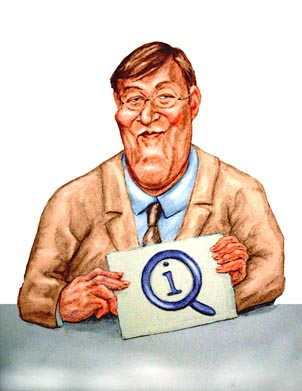

Today, of course, with the passage of more than half a century since the song's release, the circle has gone full around and there are new generations of listeners that have never heard of "Louie Louie" or its controversy. In 2014 on the "Lumped Together" episode of the British television panel show Qi, the "buzzer" for comedian David Mitchel was the opening lyrics of the Kingsmen's "Louie Louie". When host Stephen Fry asked David if he knew the song, David said he may have heard the "noises" before. Another panelist, Jimmy Carr, remembered vaguely that there was some controversy about the lyrics but couldn't remember the details.3
Footnote
The recording played on the episode sounds like the Kingsmen, but it actually appears to be a good imitation. A discerning ear will note that the recording played on QI has subtle differences compared to the original 1963 record.
For one thing, the words belted out on the Qi recording sound a bit too much like the spurious lyrics. The drum playing is also louder in the original recording than what was played on Qi. And if you listen to where the cymbals are struck, they are not quite the same on the two versions. For instance, there is a noticeable cymbal strike on the word "smelled" - misheard as "felt" - in the original Kingsmen song but the loud strike occurs just before the word "I" on the Qi song .
Finally, the lyrics on the Qi recording are not the same as the original Kingsmen version. The Kingsmen sang:":
Ah, Lou-ee Lou-eye
Oh, no,
I say, WE gotta go.
On the other hand, the original lyrics, very clearly sung on the original by Richard Berry release are:
Ah, Lou-ee Lou-ee
Oh, no,
I say, ME gotta go.
On QI, though, the group sang "Me gotta go". If both recordings are played the We/Me distinction is quite distinct.
For a bit more in-depth discussion of this interesting topic (that opens in a new window), you can click here.
Jack Ely was no longer in the group when the song was released and the early television broadcasts of the Kingsmen (with Lynn Easton taking over as lead singer) often had the group lip-syncing over the original recording. You can tell this because on these broadcasts you can hear one of the group shouting a word in the background about 55 seconds into the song.4
Footnote
What happened was that the drummer - Lynn - dropped a drumstick or otherwise missed a cue and vent forth THE WORD. The irony was that no one in authority ever recognized there really was one - albeit unplanned - "bad word" on the recording.
Jack also made a mistake on the recording. After the guitar solo the next verse begins "Me see Jamaica moon above", but Jack began singing "Me..." two bars early. He realized his error and paused until the right time. Most listeners never thought of this as a mistake and assumed that it was just part of the song.
Later when Lynn quit lip-syncing - as on a famous 1965 "Shindig" broadcast - you could understand the words quite clearly and finally see that there was nothing objectionable. But perhaps since unintelligibility was preferred, when the Kingsmen appeared on television in 1988, the group - the members now into middle age - played the song with drummer Richard Peterson singing seemingly striving to make the lyrics unfathomable. The discerning listener, though, will recognize the original and perfectly innocuous words.
Today you can even find sheet music of "Louie Louie" ranging from piano solos to full orchestral arrangements. Musicologists tell us that "Louie Louie" is written not in a major or minor key but in a Mixolydian mode. From the pitch of the opening notes the Kingsmen's version seems to be Mixolydian in the key of A, although the recording sounds slightly lower than concert pitch (possibly A4 = 438 hertz rather than standard A = 440). So the key is the same as the more familiar A major scale except the seventh note is a half step lower.
Mixolydian A

A Major

However, most of the printed sheet music also shows there is a flatted third in some places (or in the Key of A a C-natural). This gives the tune a minor or perhaps bluesy feel.

But not every third is flatted. If they all were, then "Louie Louie" would be in the Dorian mode.
However, if you listen to Jack singing the song, he doesn't flatten the third but sings the usual C-sharp:

Today there are people who do in fact claim that they heard the Kingsmen sing the real (ergo, spurious) lyrics. One young man said he heard the Kingsmen at a live performance, but at a location where there was little chance of a recording being made. The - ah - "real words" - he said were quite clear. The accuracy of this story cannot be verified at this late date but it is possible that the Kingsmen - perhaps as part of the on-going joke - from time to time might slip in some altered lyrics.
The Kingsmen have sometimes been cited as a one-hit wonder but that isn't really correct. They had another Top Ten Hit in 1964 but it was about as far removed from "Louie Louie" as can be imagined. That was "The Jolly Green Giant" a satirical song whose meaning will be lost on anyone not versed in 1960's advertising. It not only reached #4 on the Pop Charts but a few groups even released cover versions.
So now is the time to reveal the one Great Truth that has long evaded the Worlds' Collective Consciousness. And that's
No, Louie Louie reached #2 on Billboard's Hot 100 and "The Jolly Green Giant" reached #4. But other than "Money" which peaked at #16, all of their five other Top 100 Hits charted below #40. So when the album The Kingsmen's Greatest Hits appeared in the stores, most of the songs were included through courtesy. However, in their heyday the Kingsmen released eight albums, two of which were of live performances.
After 1967 the group disbanded and went about their separate ways. However, like many rock groups of the past, they regrouped and on October 20, 1987, the band - with some new members (and minus both Jack and Lynn) - played at Northwestern University. Since then they have continued to perform often in concerts where they appear with other famous groups of the past.
But throughout the decades virtually no one remembered Richard Berry the man who actually wrote the song. By 1980, Richard was living on public assistance in Los Angeles. But then he was contacted by an association that wanted to use the song. With this prompting he was able to gain most of the rights back and for the next 17 years returned to performing. Although he had originally sung the lyrics as "Lou-ee Lou-ee", he bowed to the new tradition and began singing "Lou-ee Lou-eye". In one performance he was joined by none other than Jack Ely, who although not giving up show business altogether had also begun raising horses.
But regardless of the wishes of parents, politicians, and other proprietous persons, Rock and Roll was here to stay. And with it Rock And Rollin' Humor. And amongst the Revelry Rolling among the Rocking Rollickers are knee-slappers like:
What do you call a rock and roll musician who can't carry a tune?
The lead singer.
What's the difference between playing rock and roll music and scratching your fingernails on a blackboard?
You can stand someone scratching their fingers on a blackboard.
What do you call people who hated rock and roll?
Parents.
And finally there's:
What do you call rock and roll music that people like?
Country and Western.
References and Further Reading
Louie Louie: The History and Mythology of the World's Most Famous Rock 'n Roll Song; Including the Full Details of Its Torture and Persecution at the hands of the Kingsmen, J. Edgar Hoover's FBI, & a Cast of Millions; & Introducing for the First Time Anywhere, the Actual Dirty Lyrics, Dave Marsh, University of Michigan Press (2004). (Original Edition, Hyperion Press, 1993.)
"Hot 100", Billboard, November 9, 1963, p. 16.
"Hot 100", Billboard, January 11, 1963, p. 23.
"Indiana Gov. Puts Down 'Pornographic' Wand Tune", Gil Faggen Billboard, February 1, 1964, p. 3.
"'Louie' Publishers Say Tune Not Dirty at All", Billboard, February 8, 1964, p. 4.
"'Louie Louie' - The Saga of a Pacific Northwest Hit Song", Peter Blecha, History Link, February 15, 2003.
"The Kingsmen", Jim Scheppke, Oregon Encyclopedia.
"'Louie Louie': The Story Behind the Song Everyone Knows but No One Understands", National Public Radio, Deena Prichep, October 31, 2023.
"January, 1964: Did Indiana's Governor Really Try to Ban the Hit Song "Louie Louie?", Indiana State Archives, Reddit.
"Louie Louie", Second Hand Songs.
"Louie Louie", FBI Vault, Federal Bureau of Investigation.
"Qi - "Lumped Together", Stephen Fry (host and presenter), Alan Davies (permanent panelist), Ronni Ancona (guest panelist), Jimmy Carr (guest panelist), David Mitchell (guest panelist), John Lloyd (creator), BBC, December 19, 2014.
"The Kingsmen Concert History", Concert Archives.
"Kingsmen - 'Louie Louie' - 2-26-88 TV Performance", BetaGems Lost Media.